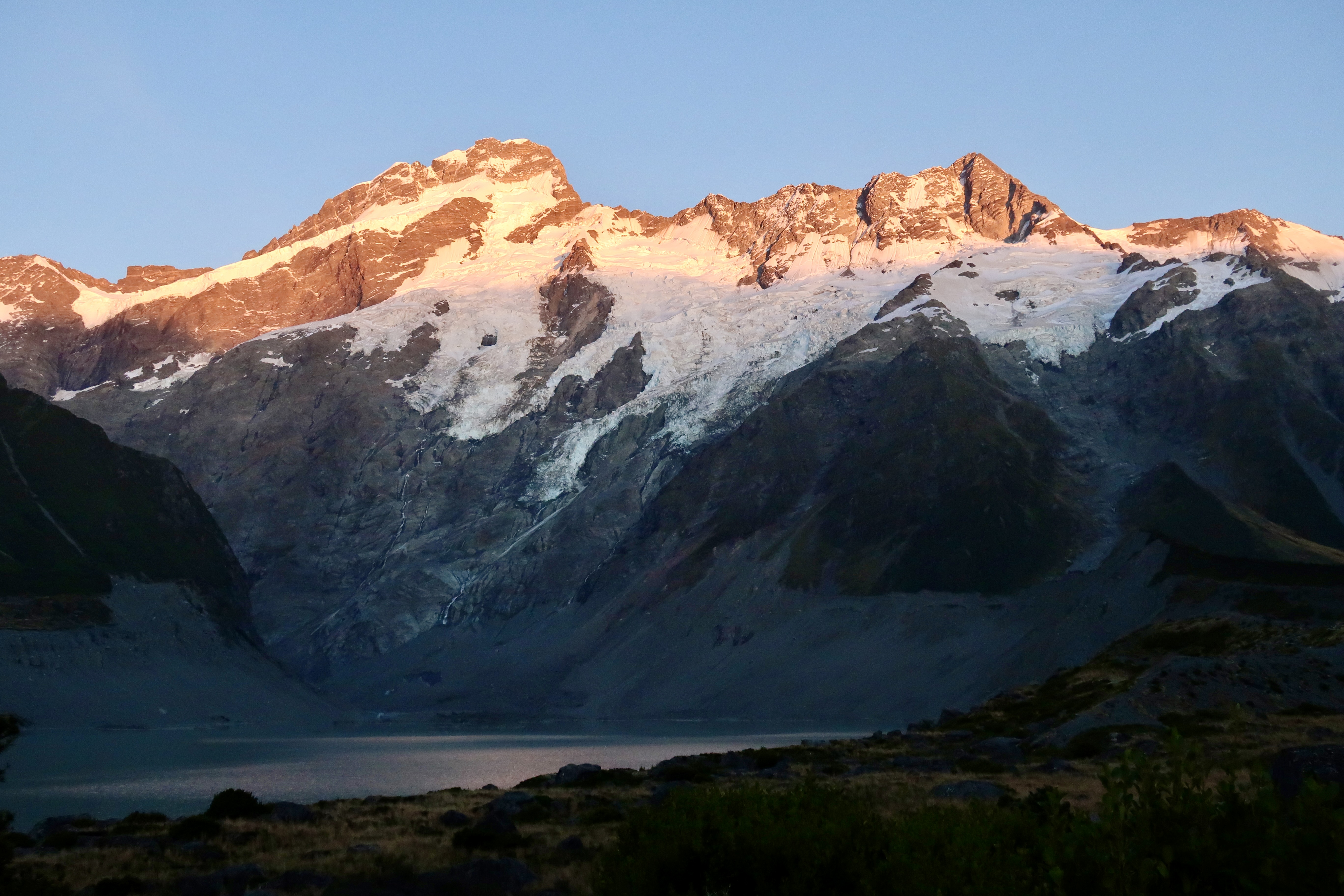
Upcoming Expedition · 2026–2027
An overland expedition across Argentina and Chile. Two people. Twenty-five thousand kilometres. Seven conservation grants. One mission: to find, document, and support the communities of Patagonia living in harmony with nature.
The Expedition
WildInvest director Celeste Allen will depart Buenos Aires for an overland expedition across Patagonia to find and document communities living in harmony with the planet. The expedition is in partnership with PathosPlanet Productions co-founder Annabel Barlow. The two will move slowly through Argentina and Chile, building relationships with the scientists, rangers, and the rural communities whose work is quietly holding the southern cone of the Americas together.
The expedition is in line with WildInvest's three strands:
WildInvest will use on the ground relationships, and connections made whilst in Patagonia to find the communities that are quietly doing incredible work.
WildInvest, in partnership with PathosPlanet Productions, will film, photograph, and produce long-form reporting from places that most international conservation media never reaches. Whilst on the ground WildInvest will be able to report directly from the field and share it as widely as possible.
WildInvest will support two local conservationists and five sustainable communities identified during the expedition itself. Once identified as a WildInvest project, our on the ground partners will receive $5,000 USD in funding up front.
Your donation funds the three strands of WildInvest.
The full route is still being shaped. Confirmed stops will be added here as the team firms up its itinerary with on-the-ground partners. The expedition departs November 2026.
About Patagonia
Patagonia spans the southern end of South America, roughly one million square kilometres, split between Argentina in the east and Chile in the west, from the Río Colorado and Bío Bío line down to Tierra del Fuego and Cape Horn.
The Andes run the length of it, creating a stark east–west divide: Chilean Patagonia is wet, fjord-cut, forested, and glaciated, while Argentine Patagonia is dry steppe and grassland lying in the mountains' rain shadow.
The Southern Patagonian Ice Field is the largest ice mass outside Antarctica and Greenland, feeding glaciers such as Perito Moreno. Offshore, the coastal zones of the Valdés Peninsula and the Patagonian Shelf are among the most biologically productive marine areas on Earth. At the southern tip, Tierra del Fuego is shared between both countries and faces the Drake Passage toward Antarctica.
Indigenous peoples occupied Patagonia for thousands of years before European contact. The Tehuelche and Mapuche on the plains and in the north, the Selk'nam (Ona), Yaghan, and Kawésqar in Tierra del Fuego and the channels further south, the latter groups notably adapted to a maritime, near-subarctic existence.
In 1520 Magellan's expedition became the first Europeans to reach the region, and gave it its name (Patagonia is thought to derive from "patagón," a term used in early chronicles for the local inhabitants, though the exact origin is debated).
For most of the colonial period, Patagonia remained outside effective Spanish control due to the region being too remote, too harsh, and too thinly resourced to be worth subduing.
In the late 19th century Argentina's "Conquest of the Desert" (1870s–80s) and Chile's parallel "Pacification of Araucanía" brought military campaigns that killed and displaced large numbers of indigenous people and opened the land to state control and settlement.
A sheep ranching boom followed, especially from the 1880s–1900s, backed heavily by British and other European capital and settlers. This created the vast estancias that still define much of the landscape and economy today, and it also drove serious ecological degradation of the steppe grasslands.
In 1865 a Welsh settlement developed in the Chubut Valley. The colony sought to preserve Welsh language and culture, still visible today in towns like Trelew and Gaiman.
From the 20th century onward Patagonia became a byword for remoteness and adventure (Darwin, Chatwin's In Patagonia), later a site of oil and gas development around Comodoro Rivadavia, and in recent decades the focus of major conservation and rewilding efforts, most visibly Tompkins Conservation's national park donations to both Chile and Argentina.
Why Patagonia
Patagonia is where irreplaceable wildlife, vast intact landscapes, and generations of local knowledge meet, and where the work to protect them is urgent, under-resourced, and rarely told.
Patagonia is one of the last large landscapes on Earth still largely free of industrial-scale development. Grasslands, steppe, temperate rainforest, and the Southern Patagonian Ice Field, the largest non-polar ice mass in the Southern Hemisphere, exist here as functioning, connected ecosystems rather than fragments. That intactness is itself rare and valuable: most of the world's temperate biomes have been broken up by agriculture, roads, and settlement.
Species like the huemul (an endangered deer), Darwin's rhea, the Andean condor, and various endemic flora exist here in low, fragile populations. Because Patagonia sits at a biogeographic crossroads and extreme latitude, many species have nowhere else to go if their habitat is lost. Once lost here, they are lost globally.
Patagonia's peatlands and forests are significant carbon sinks, and its ice fields regulate regional freshwater systems. Peatlands store carbon far more densely than most terrestrial ecosystems, so degrading them through drainage, grazing, or fire releases legacy carbon rather than just losing future sequestration. Offshore, the coastal zones around the Valdés Peninsula and the Patagonian Shelf are among the most productive ocean areas on the planet, supporting whales, penguins, sea lions, and seabirds, and underpinning fisheries far beyond the region.
Patagonia has become a flagship for large-scale rewilding (Tompkins Conservation's national park donations being the best-known example) because there is still enough intact land and low human population density to attempt landscape-scale restoration: reintroducing apex predators, restoring grasslands, removing fencing. It is also where wildlife, ranching, indigenous communities, and tourism all meet, making it a model for sustainable human–nature coexistence the rest of the world can learn from.
This is not a theoretical case for protection. Overgrazing by sheep (a legacy of 19th-century ranching), salmon farming's impact on coastal ecosystems, invasive species such as American mink and rainbow trout, glacial retreat from climate change, and mining and energy interests all create real, compounding pressures, faster than local capacity can respond. Despite the stakes, conservation here receives a fraction of global funding and attention, so support and visibility go a very long way.
Field-Identified Community Grants
The most impactful small-grant opportunities in Patagonia often emerge organically, through relationships with rangers, indigenous communities, and local scientists. WildInvest's model recognises this. The five community grants below will be confirmed during the expedition, and awarded upfront to grassroots organisations the team meets on the ground.
Each grant is USD 5,000 upfront, for equipment, habitat restoration, community ranger support, indigenous ecological knowledge documentation, or local environmental education. Each grantee also receives a designated space on WildInvest's website, media content telling their story, and direct connection to donors to stimulate further giving for their work.
USD 5,000
Grant 1 · To be confirmed
Awarded in field
USD 5,000
Grant 2 · To be confirmed
Awarded in field
USD 5,000
Grant 3 · To be confirmed
Awarded in field
USD 5,000
Grant 4 · To be confirmed
Awarded in field
USD 5,000
Grant 5 · To be confirmed
Awarded in field
5 grants of USD 5,000
To be confirmed
Awarded in the field
Field-Identified Endangered Species & Habitats Grants
WildInvest was founded on the work of bringing habitats and species back from the edge of extinction. These grants return to that root. Identified in the field, each is awarded to a conservationist working to protect a specific endangered species or the habitat that sustains it.
Each grant is USD 5,000 upfront, supporting the on-the-ground work of a single conservationist or team dedicated to one species or habitat, whether that means anti-poaching patrols, breeding and reintroduction, habitat restoration, or long-term monitoring. As with our community grants, each grantee receives a dedicated space on WildInvest's website, media content telling their story, and a direct connection to donors.
USD 5,000
Grant 1 · To be confirmed
Species or habitat, awarded in field
USD 5,000
Grant 2 · To be confirmed
Species or habitat, awarded in field
2 grants of USD 5,000
To be confirmed
Species or habitat, awarded in the field
Support the Expedition
Every donation funds field expeditions, documentation, regranting, and the slow patient work of building relationships with the people doing conservation on the ground.
Fund the Expedition