Current Project · Nicaragua

Nicaragua Community Projects

Three community projects. Two local NGOs. One shared conviction that humans and ecosystems belong together.

← Back to Projects

Central America · Ongoing

Why Nicaragua?

Nicaragua is one of the most ecologically diverse countries in Central America, a nation of volcanoes, lakes, forests, and coastlines that have sheltered extraordinary biodiversity for millions of years. It is also a country where rural communities, despite facing enormous economic pressure, have continued to practice forms of land stewardship that the rest of the world is only beginning to understand.

WildInvest is supporting two distinct but connected community organisations and their three projects. In La Camaroncita, in the inland Granada department, La Asociación Nochari supports farming families working with agroecological practices that feed households, restore ecosystems, and rebuild communities — including a remarkable iguana conservation programme. On Ometepe Island, a UNESCO Biosphere Reserve in the middle of Lake Nicaragua, the conservation group Biometepe and its partners are protecting the last significant population of the critically endangered yellow-naped amazon parrot, while also running an agroforestry programme that develops and shares bio-fertilisers and organic farming techniques with local farmers.

These are not projects that arrived from outside with solutions. They are communities that found their own way and needed support to go further. WildInvest is here to document what they are doing and make sure the world hears about it.

WildInvest visited these projects in March 2025 thanks to Fauna & Flora, who provided the on-the-ground connection. Fauna & Flora has been working in Nicaragua since 1998, with Asociación Nochari since 2024, and with Biometepe since 2018.
Partners: Asociación Nochari · Nandaime Biometepe · Ometepe Fauna & Flora
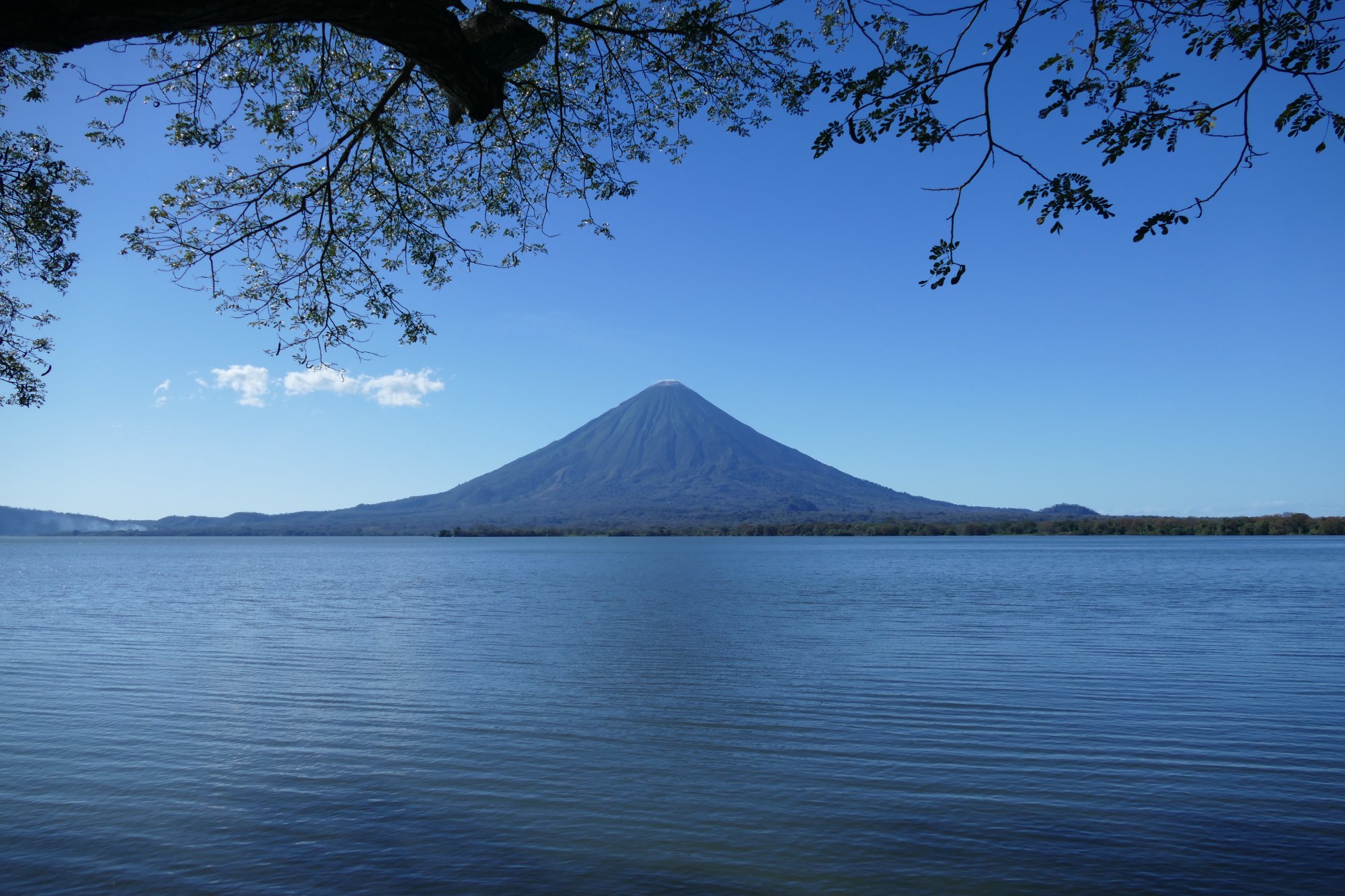
Volcán Concepción and Volcán Maderas rising from Lake Nicaragua, Ometepe Island
Ometepe Island: twin volcanoes rising from Lake Nicaragua. The island is a UNESCO Biosphere Reserve.

Asociación Nochari — Agroecology & Community Farming

La Camaroncita · Granada Department, Nicaragua

The Context

A farming revolution built on ancient knowledge.

Agroecology is a holistic approach to farming that treats the land not as a resource to be extracted, but as a living system to be sustained. It combines ecological principles with the ancestral knowledge of farming communities, seeking to produce enough food while protecting biodiversity, restoring degraded land, and building resilience against climate change.

In Nicaragua, where family farming supplies more than 80% of the country's food using less than 40% of farmable land, agroecology is not an abstract idea. It is how millions of families already eat. What Asociación Nochari has done is organise, strengthen, and amplify these practices, creating a network of farming households who support one another, exchange knowledge, and prove that sustainable farming is not only possible but productive.

Founded in 1997, Asociación Nochari is headquartered in Nandaime, in the inland Granada department of Nicaragua, southwest of Lake Nicaragua. The farming communities they support, including those in La Camaroncita, are spread across the surrounding rural landscape. WildInvest's funding goes directly to Asociación Nochari, who use it to support the farmers and fincas in their network, providing technical assistance, resources, and the organisational backbone that makes the agroecology programme possible.

La Camaroncita 11.758°N · 85.922°W

FIELD LOCATION Nochari's farmer network is centred in La Camaroncita, in Nicaragua's inland Granada department, southwest of Lake Nicaragua.

"We lost $80,000 overnight. Not paused, cancelled." Asociación Nochari team member, March 2025

The crisis, and why WildInvest is here.

In early 2025, Asociación Nochari lost $80,000 in funding, all of it cancelled as a result of cuts by the current Administration to the US Department of Agriculture and Forestry. At a stroke, the financial infrastructure supporting dozens of farming families across the Granada department was stripped away. The community projects continued, because the people in them are not held together by money. But the support they depended on was gone.

Celeste Allen visited in March 2025 in association with Fauna & Flora, who provided the connection to Asociación Nochari and have an established relationship with the organisation. What she found was extraordinary, and urgently in need of visibility and support.

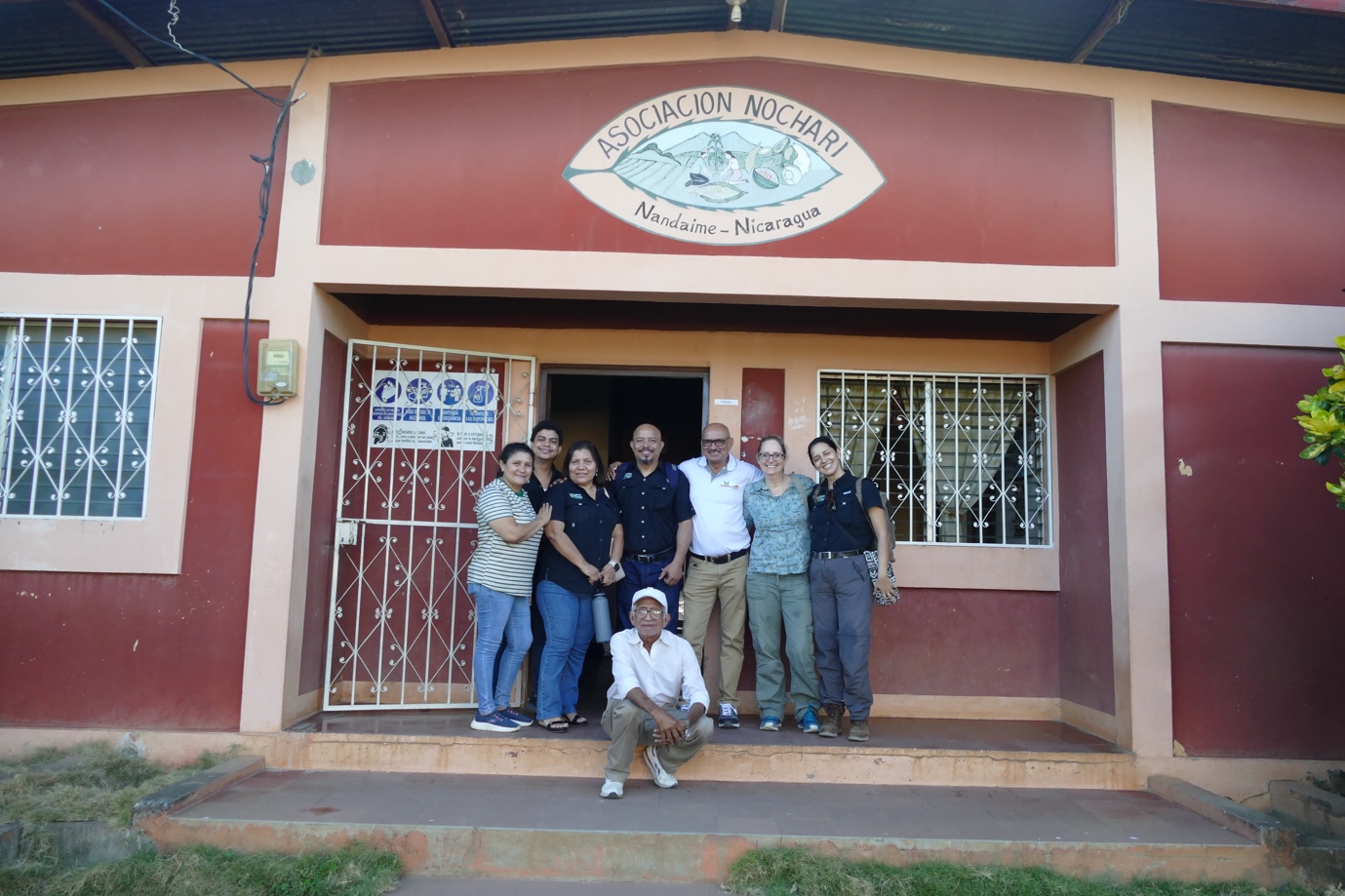
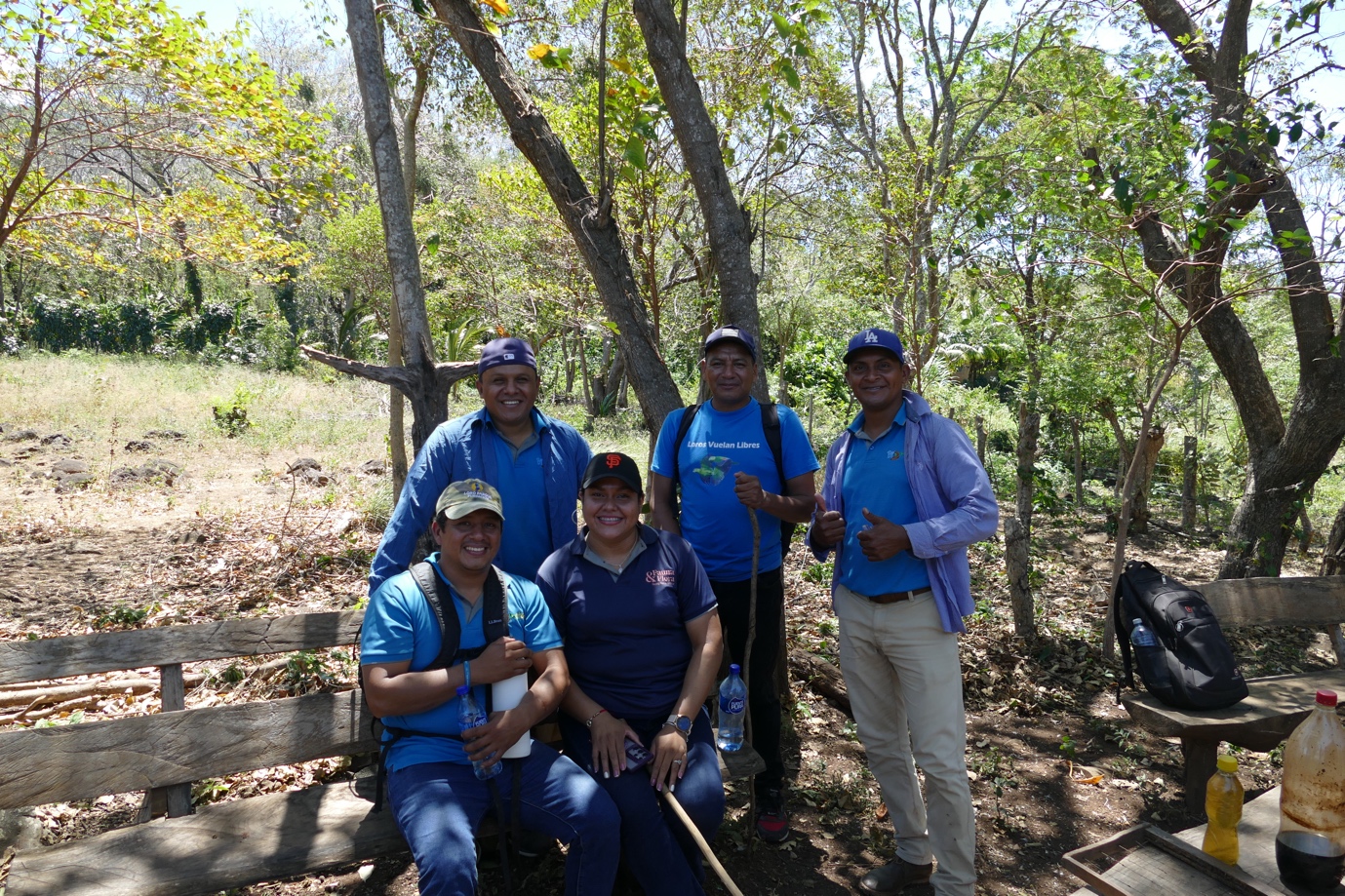
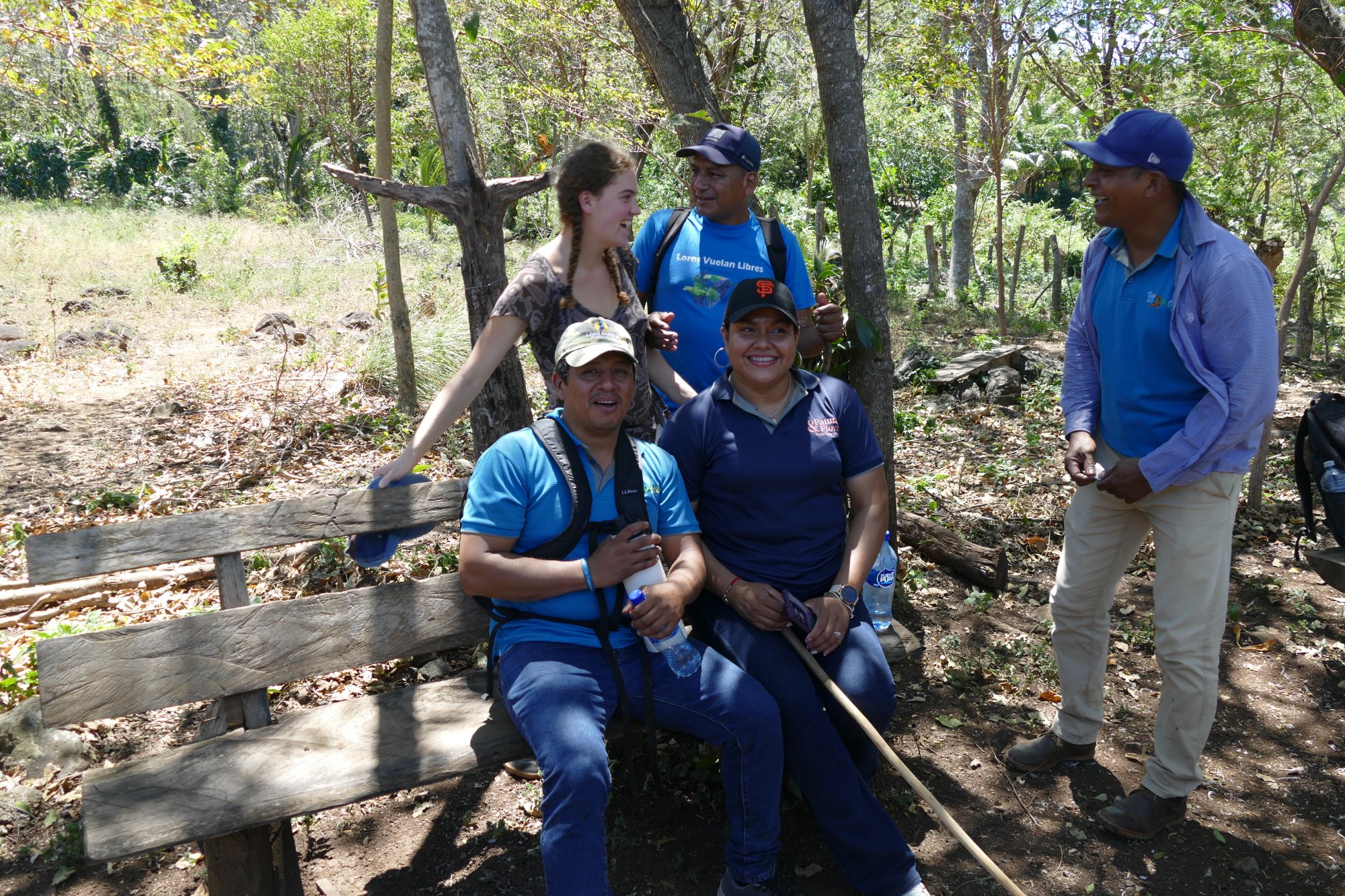
Asociación Nochari and the Fauna and Flora team in Nicaragua, March 2025
Asociación Nochari and the Fauna & Flora team in Nicaragua. From left to right: Adela Guerrero (Nochari's Executive Director); Osmar Sandino (Landscapes Programme Manager, Fauna & Flora); Angelica Valdivia (Nicaragua Country Director, Fauna & Flora); Ronald Miranda (Technical Specialist, Fauna & Flora); Eduardo Gomez (GPAE National Agroecology Network Focal-Point); Alison Gunn (Senior Programme Manager, Central America, Fauna & Flora); Marcela Gutierrez (Technical Specialist, Fauna & Flora); Don Bayardo (Driver, Fauna & Flora).
The People

The farmers of La Camaroncita.

Edgar, Iguana Conservationist & Community Leader

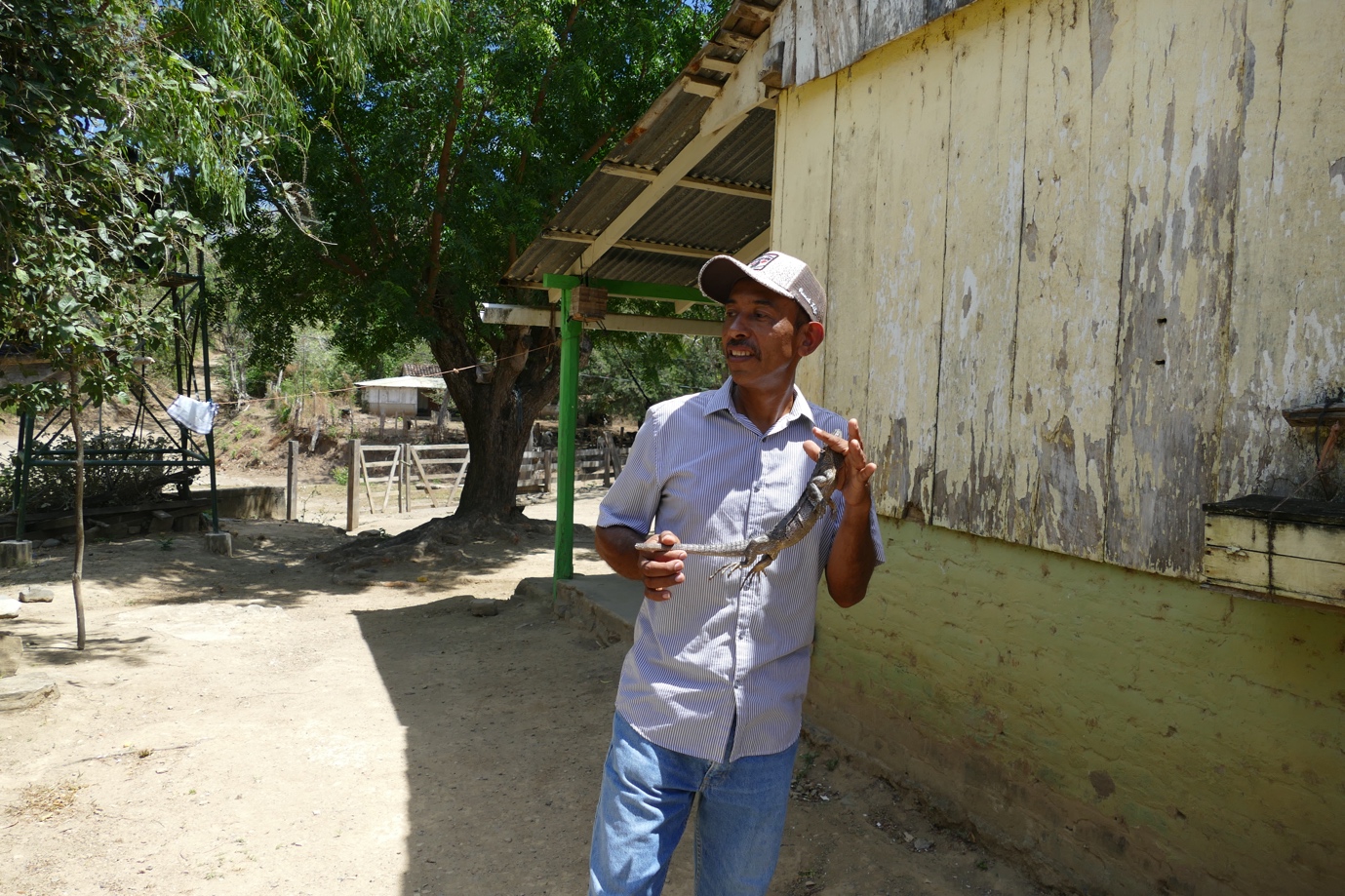
"I was born here. My grandfather farmed this land. I could not do what I do without the support of Nochari."  Edgar is an extraordinary figure in La Camaroncita. Born and raised on this land, he has developed one of the most distinctive elements of the agroecology programme: iguana conservation and sustainable release.

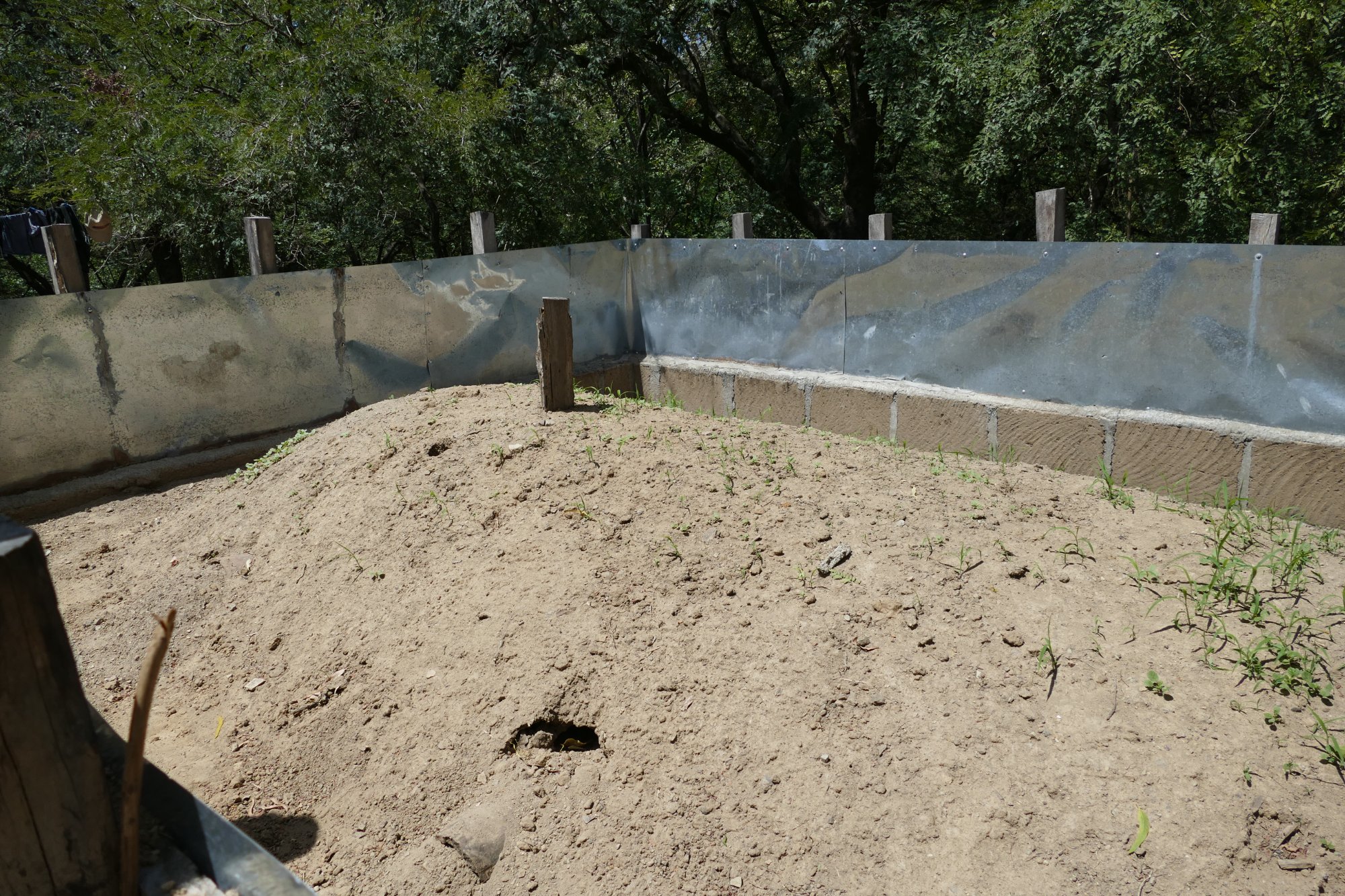
The iguana is a traditional food source in Nicaragua, hunted and eaten across the country for generations. Edgar's work has been as much about changing local behaviour and attitudes as it has been about the animals themselves, shifting the iguana from being seen as something to hunt and eat, to something to protect and celebrate. He has released 1,500 iguanas into the wild from his finca, using purpose-built nesting enclosures where eggs are incubated and hatchlings raised before being returned to the surrounding landscape.

Edgar has also taken the work into local schools, visiting primary and secondary classrooms during hatching season to involve children in incubation, hatching, and release. The next generation of conservationists in La Camaroncita is being shaped by one farmer with a conviction that the land around him should be alive.

Agroecological farmer Edgar Cabrera holding a young iguana in Nandaime, Nicaragua
Agroecological farmer Edgar Cabrera in Nandaime. Edgar receives agroecology extension support from Asociación Nochari and works with them on the conservation of iguanas.
Edgar's iguana nesting enclosure in La Camaroncita, a purpose-built sand pit where iguanas lay and incubate their eggs
The iguana nesting enclosure, purpose-built for egg-laying and incubation.
Agroecological farmer Marcia del Carmen Traña Álvarez in Nandaime
Agroecological farmer, Marcia del Carmen Traña Álvarez. Marcia receives agroecology extension support from Nochari and is a local leader in the Community Commission for forest protection in Nandaime and the Escalante Chacocente Wildlife Reserve.

Marcia, Farmer & Agroecologist

Marcia farms 20 manzanas (roughly 14 hectares) of agroforestry land in La Camaroncita. When the team visited in March 2025, she spoke about the change in herself as much as the change in the land. "I have found more confidence in myself as a woman. We are strong. We just needed to be told that we were."

One of the most striking findings of the Nochari programme is that women have been significantly more receptive to agroecological practices than men. In communities where men frequently leave to find work elsewhere, a pattern exacerbated by monoculture farming, which has eroded the economic case for staying, women are left managing the land. They think long-term. They think about family income. They have nothing to gain from a model that depletes the soil and requires expensive inputs, and everything to gain from one that builds resilience over time.

Nochari now targets 60% female-headed farming households across its programme, with 30% male-led and 10% youth participants. This is not a quota imposed from outside. It reflects where the energy and the openness to change actually lives in these communities.

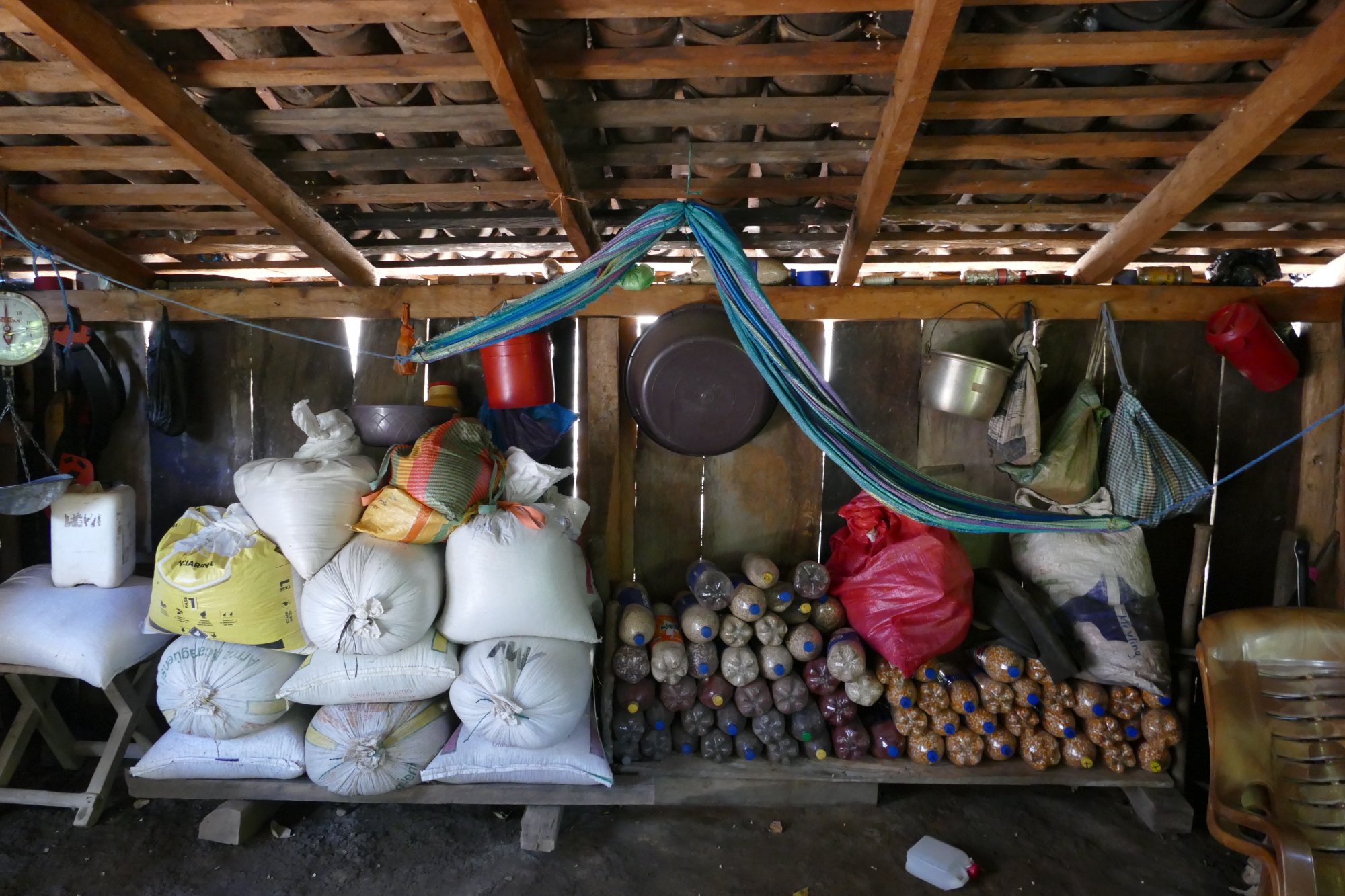
Community grain reserves and seed stores on Marcia's farm in La Camaroncita
Grain reserves and seed stores on Marcia's farm, insurance against the dry season.
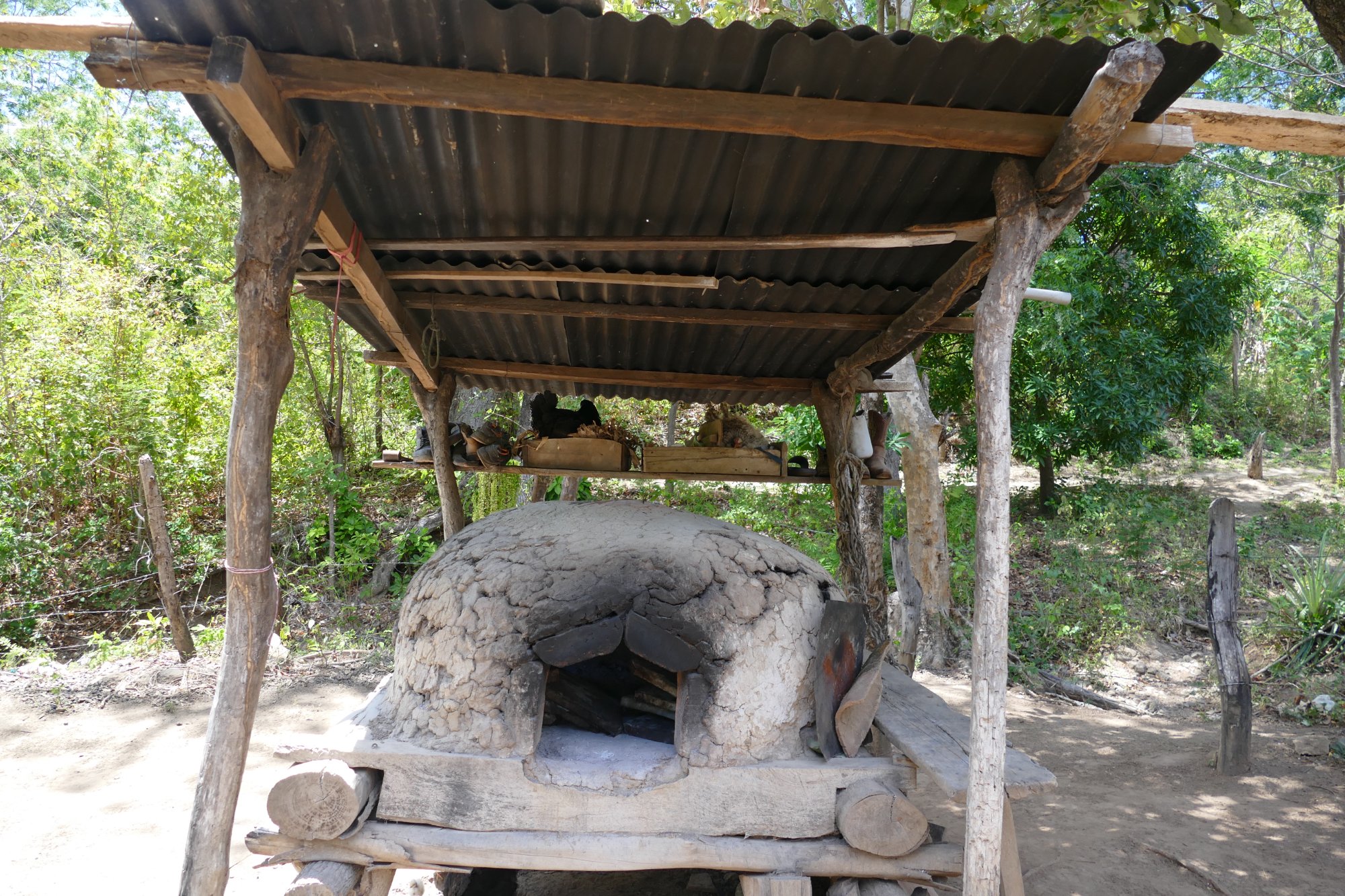
A traditional clay outdoor oven beneath a wooden shelter on Marcia's farm
A hand-built clay oven on Marcia's farm, fuelled by wood, used every day.
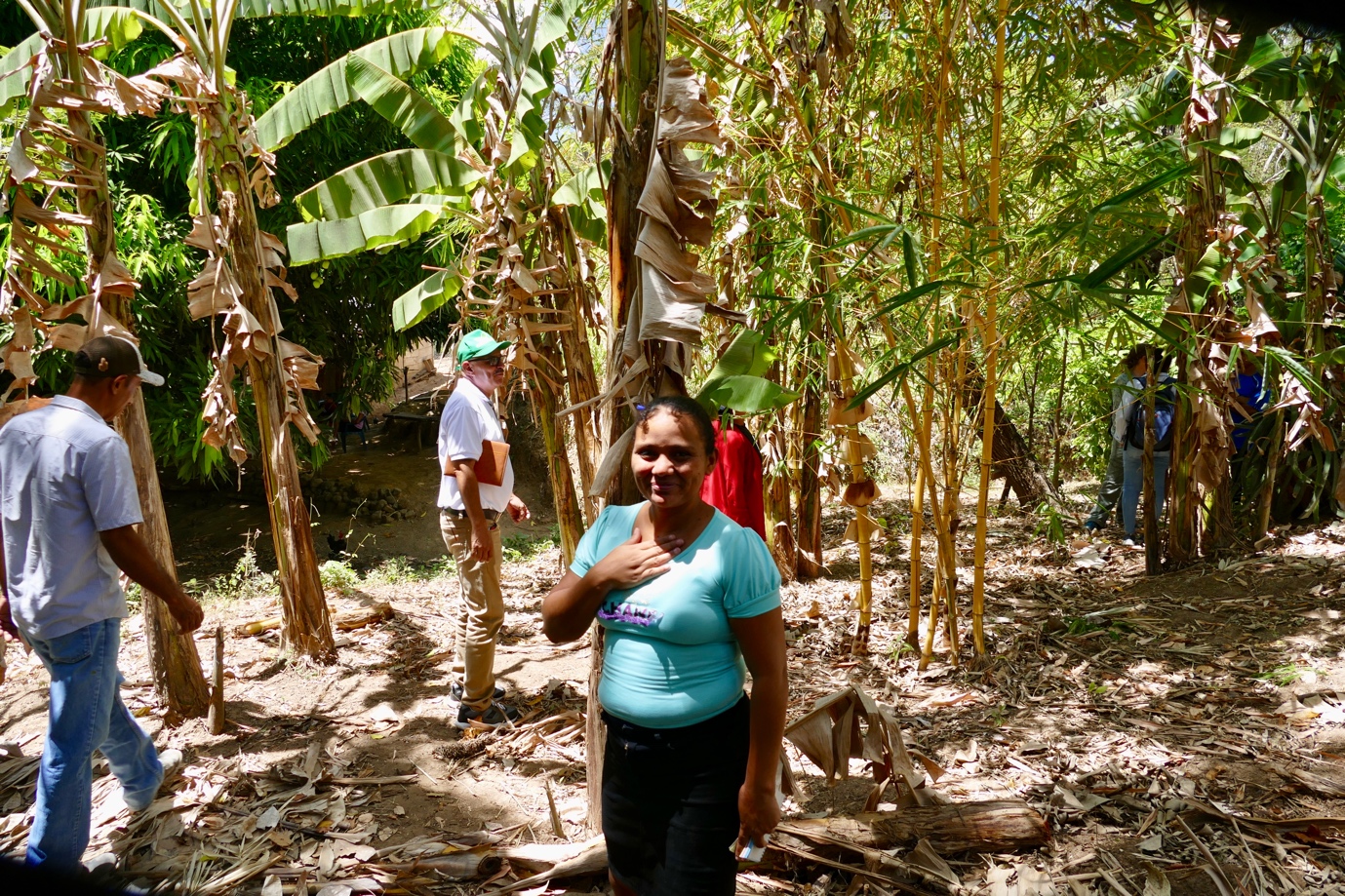
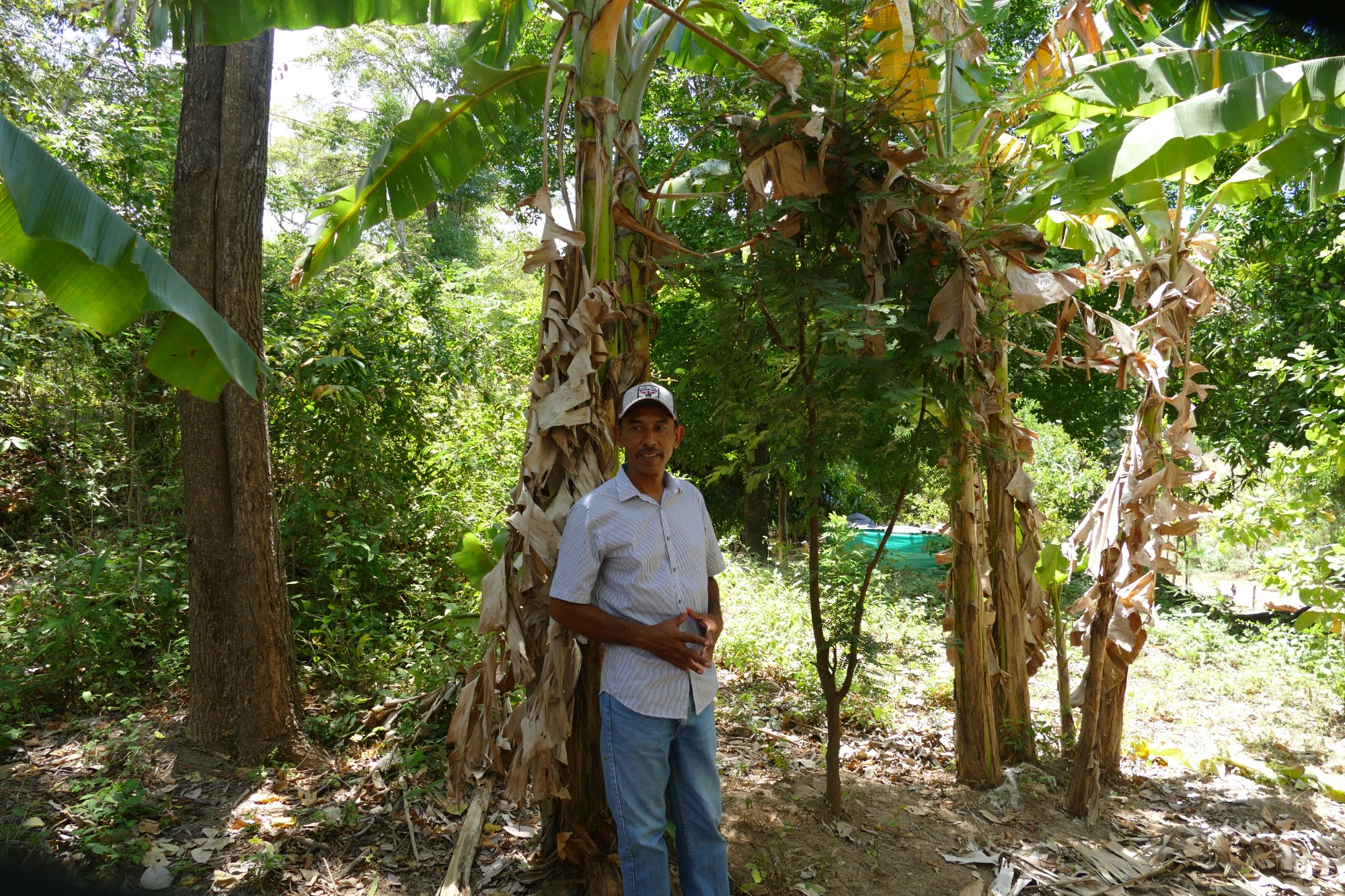
Edgar standing in Marcia's agroforestry plot in La Camaroncita
Edgar in Marcia's agroforestry plot, bananas and native trees growing where monoculture once was.

Farming Practices

What the Nochari farmers are doing.

Crop diversification

Moving away from monoculture to grow a wide range of food crops, reducing vulnerability to weather, disease, and price shifts in any single commodity.

Agroforestry

Integrating trees into farmland so that animals can graze in the shade, soil moisture is retained, and native species are given space to establish. The mango tree, for example, takes 60 years to mature, farmers planting them today are making a gift to the next generation.

Soil rotation and regeneration

Resting and rotating land to allow soils to recover, rather than depleting them season after season.

Natural and local fertilisers

Replacing expensive chemical inputs with compost and locally-produced organic fertilisers, cutting costs and rebuilding soil health simultaneously.

Community grain reserves

Maintaining shared stores that buffer farming families against drought and crop failure, providing food security when the dry season is at its hardest.

Iguana conservation and release

Edgar's programme of breeding iguanas and releasing them into the surrounding landscape, changing local attitudes towards iguana conservation and backing community education in local schools.

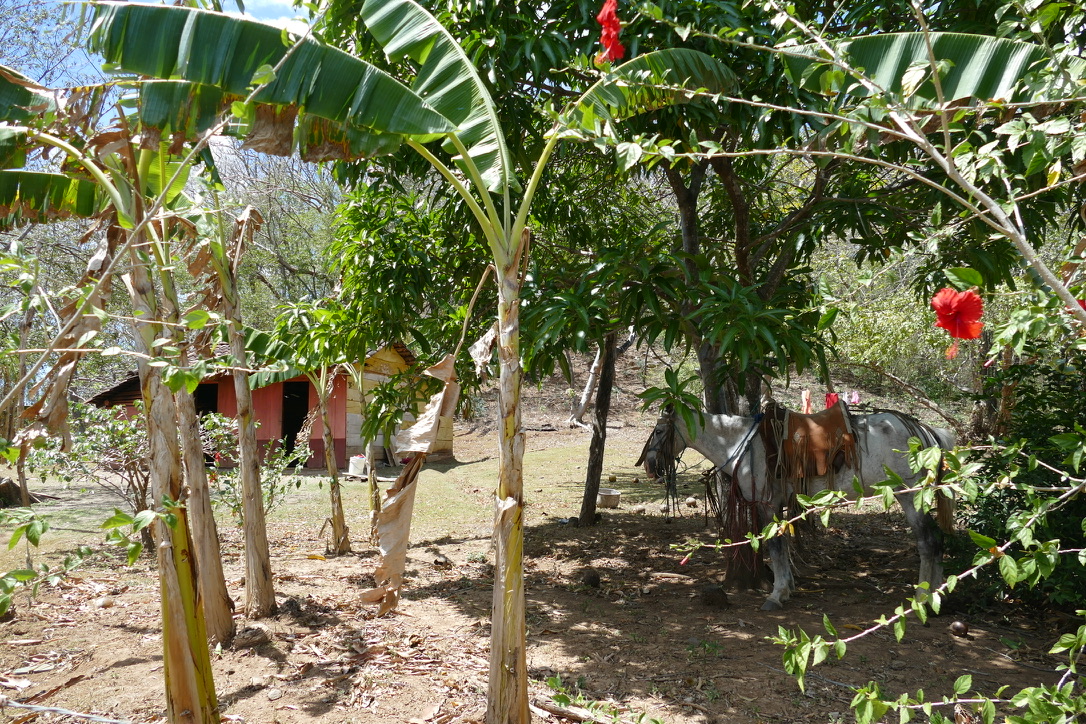
A finca in La Camaroncita with banana and mango trees, flowering hibiscus, and a saddled horse beside the family home
A working finca in La Camaroncita, banana, mango, and flowering hibiscus growing together around the family home.

Wildlife returning to the land.

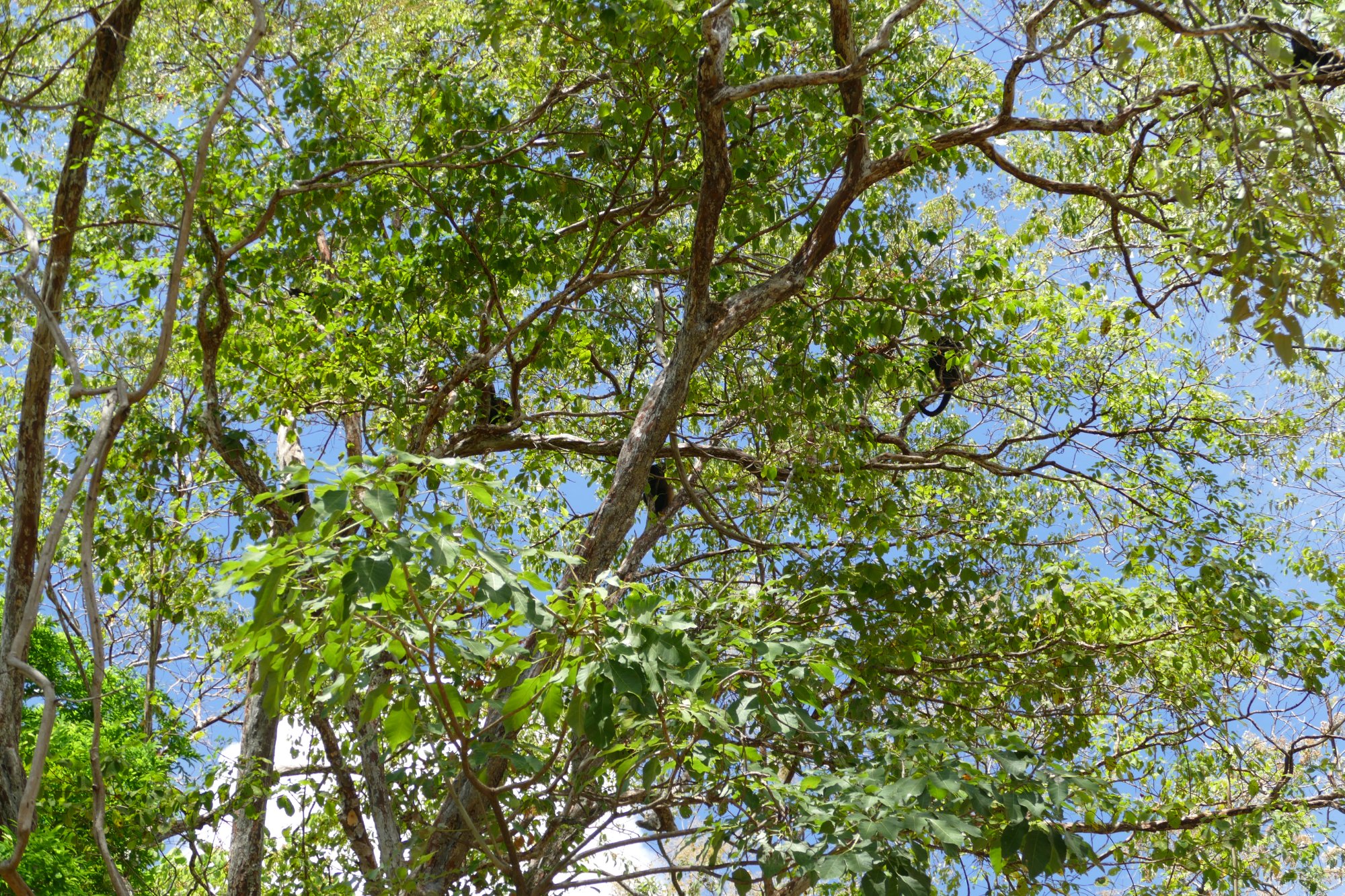
One of the most striking moments of the March 2025 field visit was looking up and seeing howler monkeys in the tree canopy directly above the farms. In a landscape that has been under agricultural pressure for decades, the return of wildlife to agroforestry land is one of the most powerful indicators that something is genuinely working.

The trees the farmers have planted and protected are not just producing food. They are rebuilding corridors through which the wider ecosystem can begin to move again.

Howler monkeys in the tree canopy above the agroforestry farms in La Camaroncita
Howler monkeys in the canopy above the farms. Wildlife returning to restored agroforestry land.
60%
Female-headed households in programme
1,500
Iguanas released into the wild by Edgar
1997
Year Asociación Nochari was founded

Biometepe — Yellow-naped Amazon Parrot & Agroforestry

Ometepe Island · UNESCO Biosphere Reserve, Lake Nicaragua

The Place

An island that holds the future of a species.

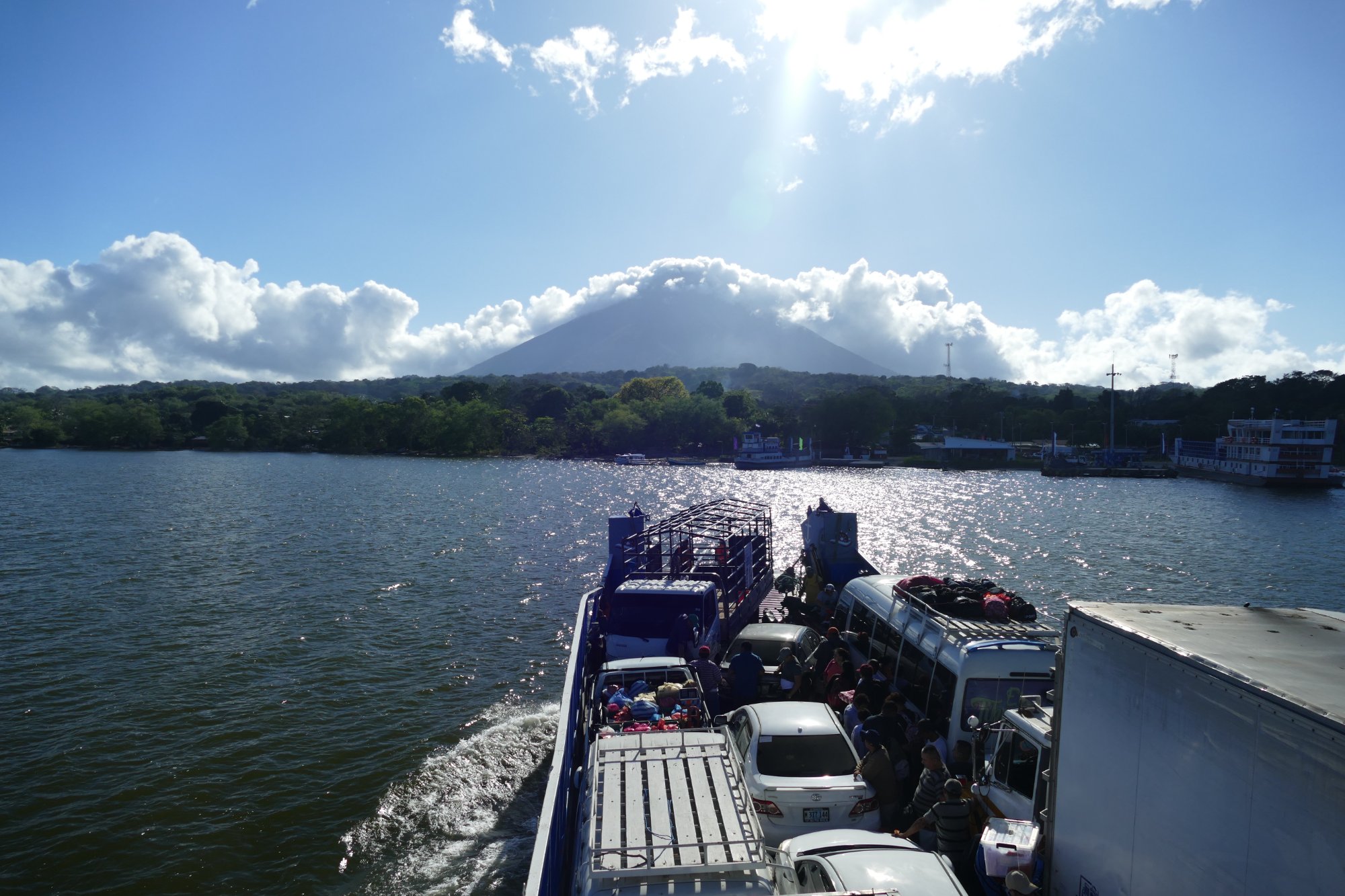
Getting to Ometepe requires a ferry crossing from the mainland, a journey that frames the island perfectly. As you approach, the twin volcanoes emerge from Lake Nicaragua ahead of you, rising steeply from one of the largest freshwater lakes in Central America. The island is a UNESCO Biosphere Reserve covering 276 square kilometres, home to 170 bird species, 55 of them migratory, and to nearly 40,000 residents whose lives are built in close relationship with its forests, rivers, and wildlife.

Among all the creatures that live here, one has come to define both the island's identity and the urgency of its conservation challenge: the yellow-naped amazon parrot. Ometepe holds the largest remaining population of this critically endangered species anywhere in its range, an estimated 1,800 to 2,000 birds, in a global population of around 2,500. The yellow-naped amazon has declined by more than 92% in the last three generations. What remains, to a remarkable degree, lives here.

Partners on Ometepe: WildInvest supports Biometepe, a Nicaraguan ornithological conservation group working on Ometepe since 2018, in partnership with Fauna & Flora, one of the only international conservation charities currently working in Nicaragua.
On the ferry approaching Ometepe Island, with Volcán Concepción visible ahead rising from Lake Nicaragua
LAKE NICARAGUA. Approaching Ometepe Island by ferry, Volcán Concepción ahead.
Ometepe Island 276 km² · UNESCO

FIELD LOCATION Ometepe Island sits in the middle of Lake Nicaragua, a UNESCO Biosphere Reserve formed by two volcanoes (Concepción and Maderas) joined by a narrow isthmus.

Biometepe's yellow-naped amazon parrot conservation team on Ometepe Island
Biometepe's parrot conservation team. Left to right: Adonis Lopez, Emerson Urtecho, Katherine Barrios (Fauna & Flora), Marlon González, Norlan Morales.
Celeste Allen with the Biometepe conservation team and Fauna and Flora colleagues
Celeste Allen with the Biometepe team and Fauna & Flora colleagues, Ometepe Island, March 2025.

The Biometepe team.

Biometepe is a Nicaraguan ornithological conservation group that has been protecting the yellow-naped amazon parrot on Ometepe since 2018, working in partnership with Fauna & Flora and government authorities. The programme now operates across six communities on the island: Peña Inculta, Mérida, Balgue, La Palma, Pull, and Las Cuchillas.

The team combines scientific monitoring with deep community engagement, training local parrot guardians, running environmental education in schools, and deploying camera traps to watch over known nesting sites between visits. Their work is painstaking, physically demanding, and irreplaceable.

The Species

The yellow-naped amazon, on the edge.

The yellow-naped amazon (Amazona auropalliata) is classified as Critically Endangered by the IUCN. Despite its name, it is found not in the Amazon but along the Pacific slope of Central America, from southern Mexico to northern Costa Rica, yet it has been all but eliminated from Mexico, Guatemala, and Honduras. Nicaragua is now its most important stronghold, and Ometepe its most important address.

The species faces two primary threats. The first is habitat loss. Deforestation driven by agricultural expansion is eliminating the mature trees the parrots depend on for nesting, with some nest holes located as high as 30 metres above the forest floor. The second is the illegal pet trade. The yellow-naped amazon is one of the most sought-after parrots in Central America, intelligent, long-lived (up to 90 years), monogamous, and capable of mimicry. An estimated 25% of households on Ometepe keep parrots as pets.

The parrots return to the same nesting site year after year, which makes them acutely vulnerable to poachers who know exactly where to find them. Rather than targeting adults, poachers take eggs and chicks. At least 50% of nestlings die in transit to the pet trade. On Ometepe, even with conservation efforts in place, an estimated 40% of nests have been plundered in recent years.

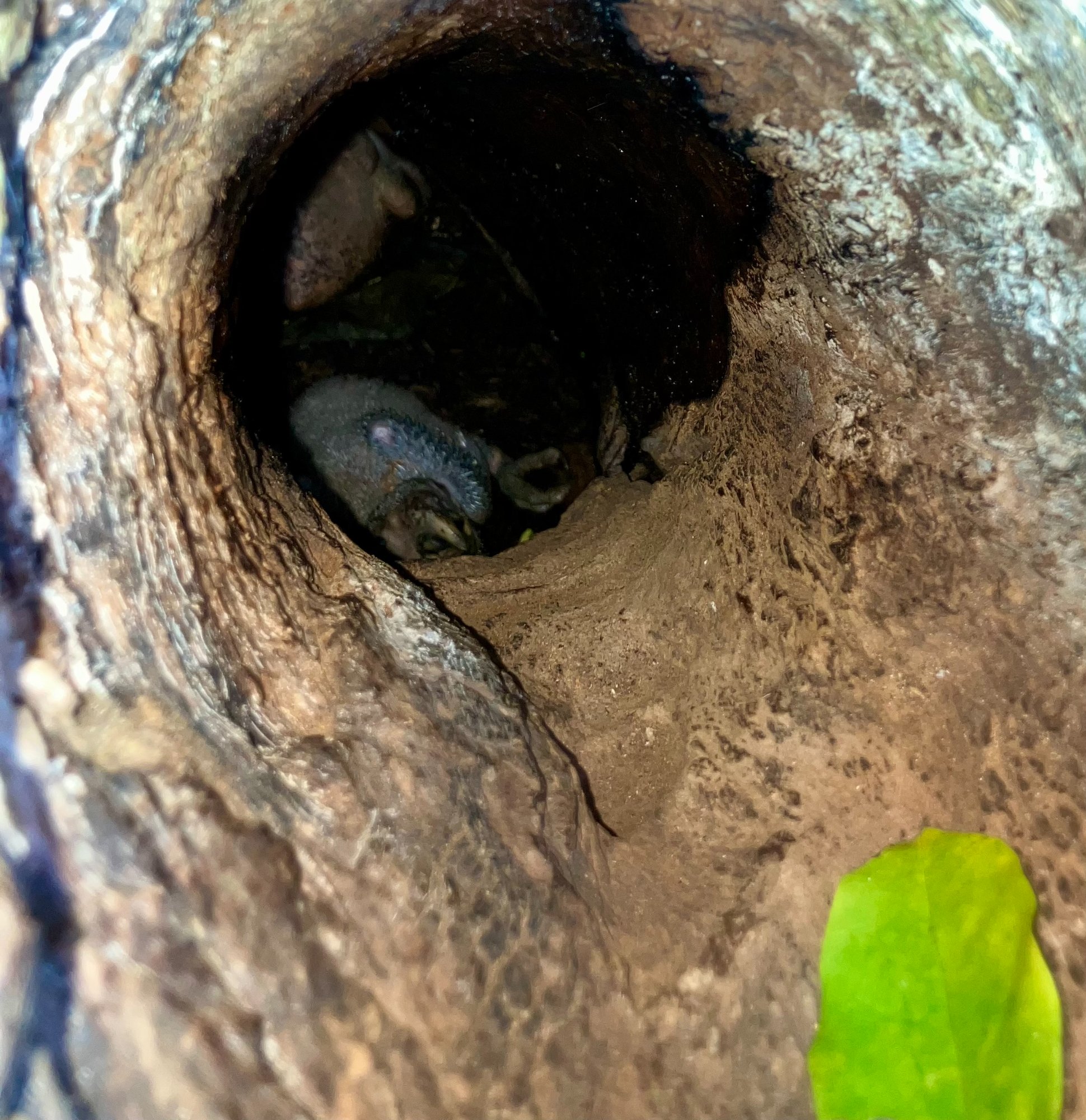
Yellow-naped amazon parrot chicks visible inside a nest hole in a tree on Ometepe Island
Yellow-naped amazon parrot chicks inside a nest hole, photographed during nest monitoring on Ometepe Island.
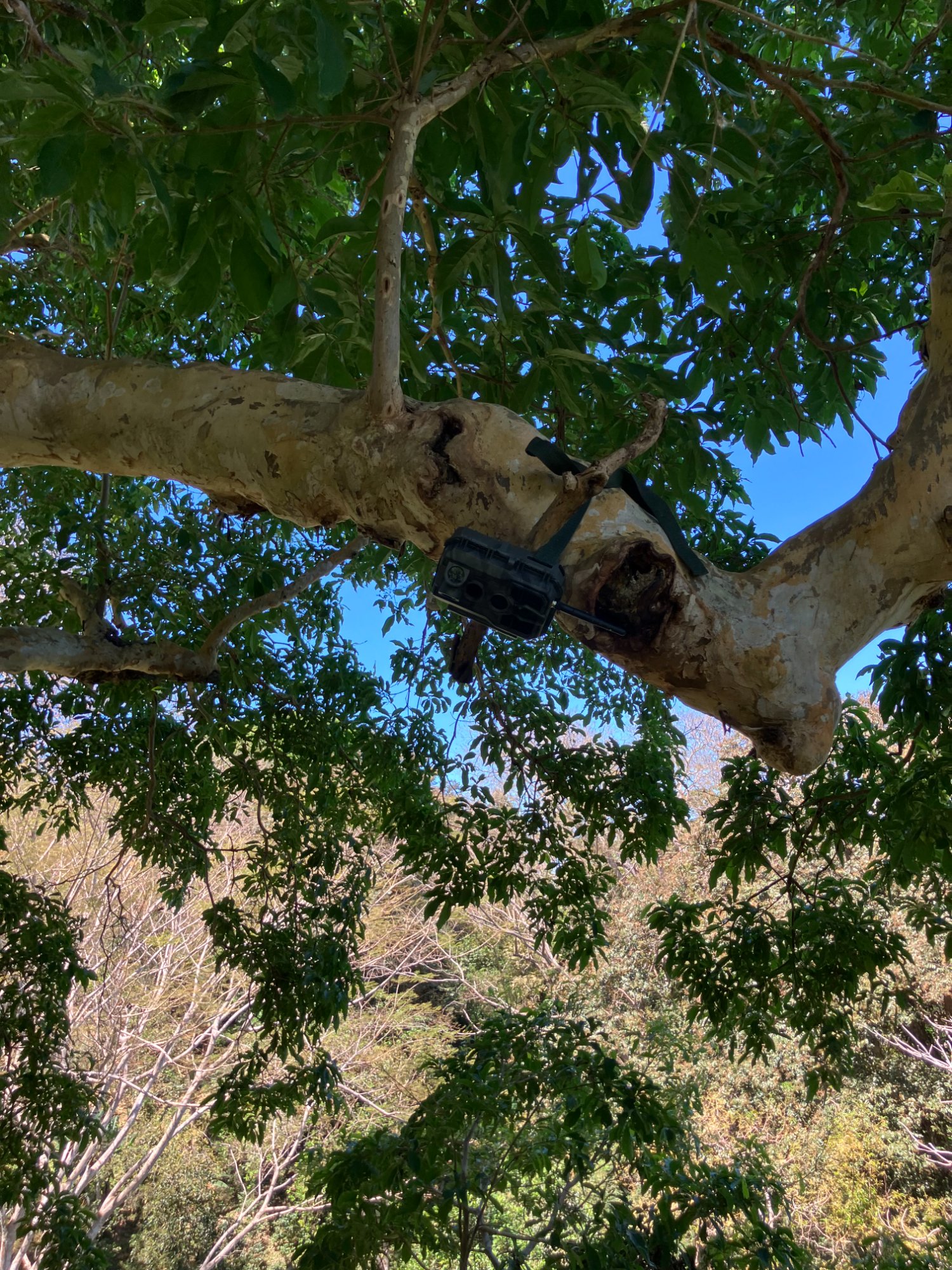
A camera trap mounted in the branches of a tree on Ometepe Island to monitor a yellow-naped amazon parrot nesting site
A camera trap mounted at a parrot nesting site, monitoring between visits to detect any poaching activity.
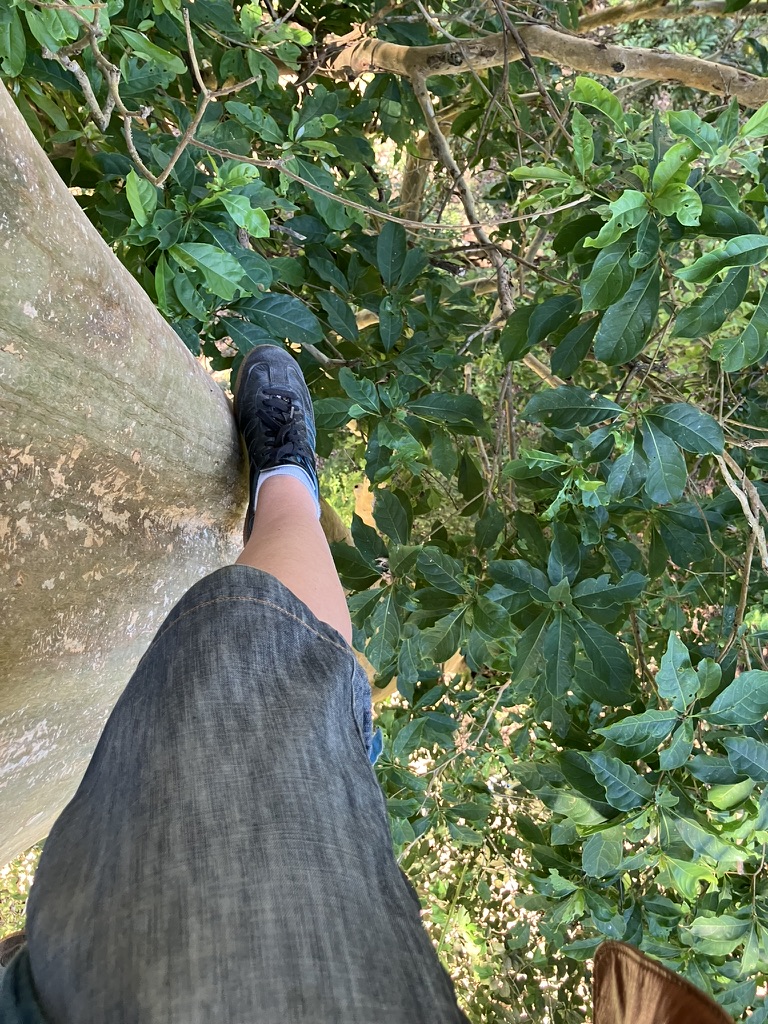
The view looking down from high in a nesting tree on Ometepe Island during nest monitoring
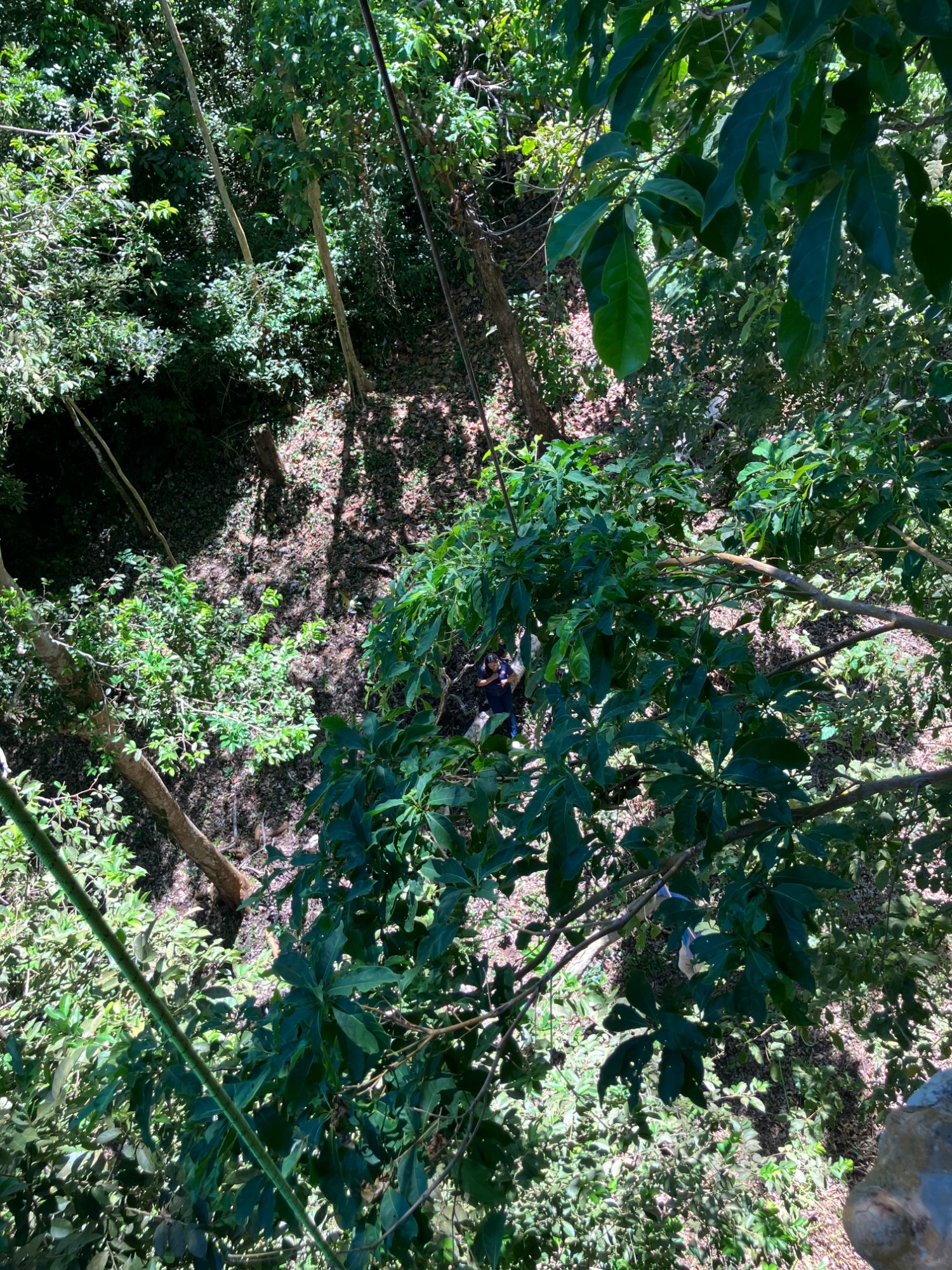
Dangling from a tree. Yellow-naped amazon nest holes can sit as high as 30 metres above the forest floor.

The Work

Climbing for parrots.

During breeding season, members of the Biometepe team physically scale the trees where yellow-naped amazon pairs have made their nests, sometimes reaching heights of 25 to 30 metres, to check on eggs and chicks, assess their health, and document nest success. Watching this happen is one of the most vivid demonstrations of what genuine conservation commitment looks like.

The team carry ropes, harnesses, and climbing equipment deep into the forest to reach nesting trees. Once a climber reaches the nest hole, they carefully check the chicks inside, recording data, checking for signs of distress, and confirming the nest remains unpoached. This painstaking, labour-intensive fieldwork is repeated across multiple communities throughout the breeding season.

When Celeste visited in March 2025, there were only three Biometepe team members responsible for monitoring and checking all nest sites across the island. To climb a tree and check a nest safely requires all three of them, meaning that if any one member was unavailable, the monitoring work stopped entirely. Speaking with Adonis and his team, one of the issues he highlighted most urgently was capacity: there are simply not enough of them. Additional funding would allow Biometepe to train more members of the local community as nest monitors, expanding the team, increasing the number of nests that can be protected, and building the kind of resilience that a programme this important demands.

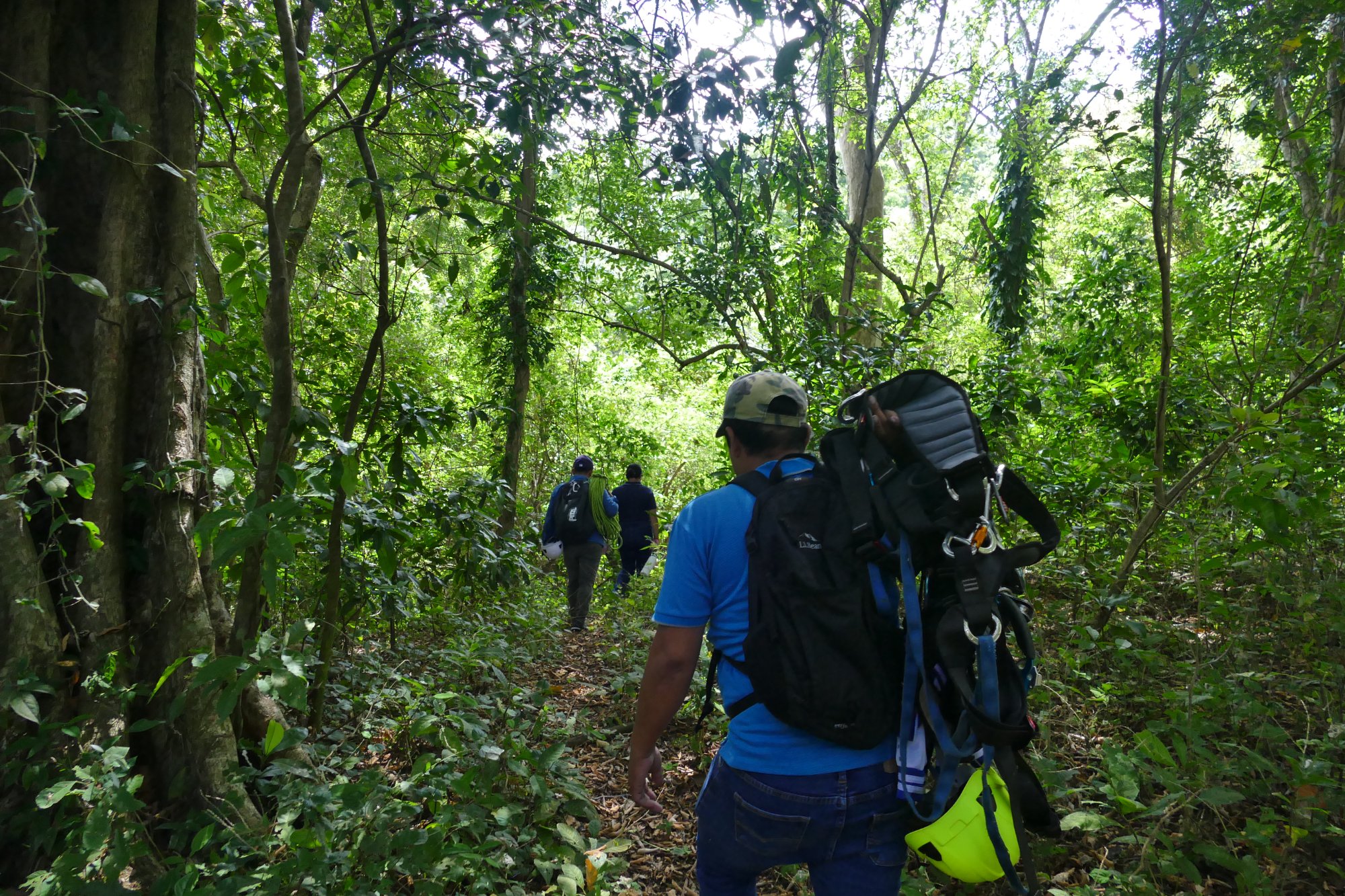
The Biometepe team walking through dense forest carrying climbing equipment
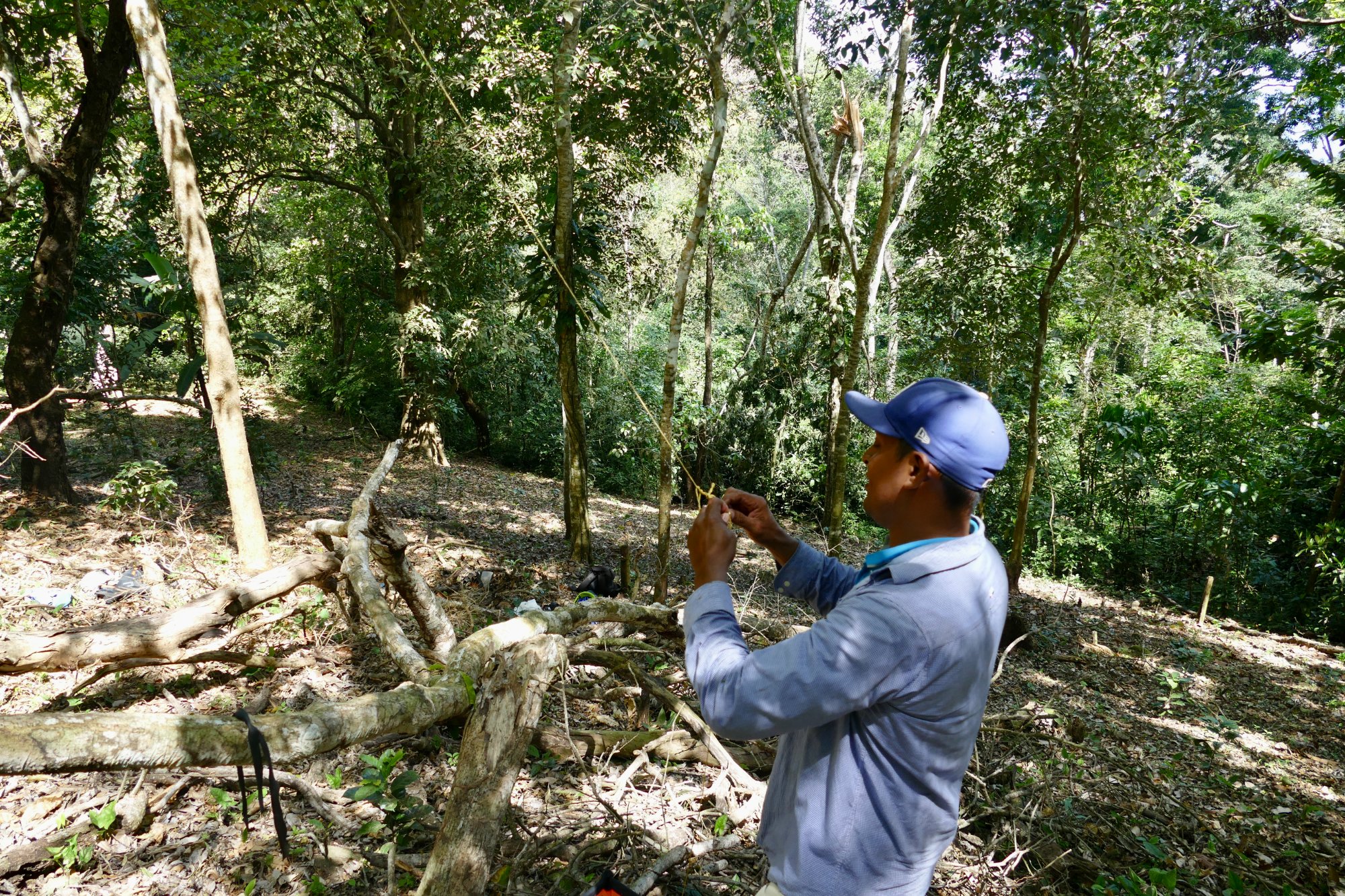
Adonis and the Biometepe team walking to the nesting site, carrying all equipment through the forest.
Securing the climbing rope before ascent to a parrot nesting site
Norlan securing the climbing rope before ascent.
Celeste's view from above showing the height the yellow-naped amazon parrots' nests are at
Celeste's view from above, the height a parrot nest sits at.
Video Coming Soon

Inside the nest: a yellow-naped amazon chick, filmed during nest monitoring on Ometepe Island.

92%
Decline of yellow-naped amazon over three generations
~2,500
Estimated global population remaining
1,800+
On Ometepe Island

Agroforestry

When the farm becomes the forest.

Alongside the parrot conservation work, Fauna & Flora and Biometepe run an agroforestry programme on Ometepe that addresses the other side of the conservation equation: reducing pressure on the island's forests by making sustainable farming more productive and more appealing than clearing new land.

The approach involves crop diversification, agroforestry, organic farming, and live fences rather than burning. But on Ometepe there is a specific dimension, the direct link between farming practice and parrot survival. Deforestation for new farmland is one of the primary threats to the yellow-naped amazon. Every farmer who adopts agroforestry and reduces the pressure to clear forest is, directly and concretely, a parrot conservationist.

Of the farmers interviewed as part of the programme, 95% identified agroforestry techniques, crop diversification, forest protection, and the avoidance of burning as having measurably improved their farms. The team has also found, as Nochari has found in La Camaroncita, that women in farming households are particularly receptive to the new model, thinking long-term and for the whole family rather than for a single season's yield.

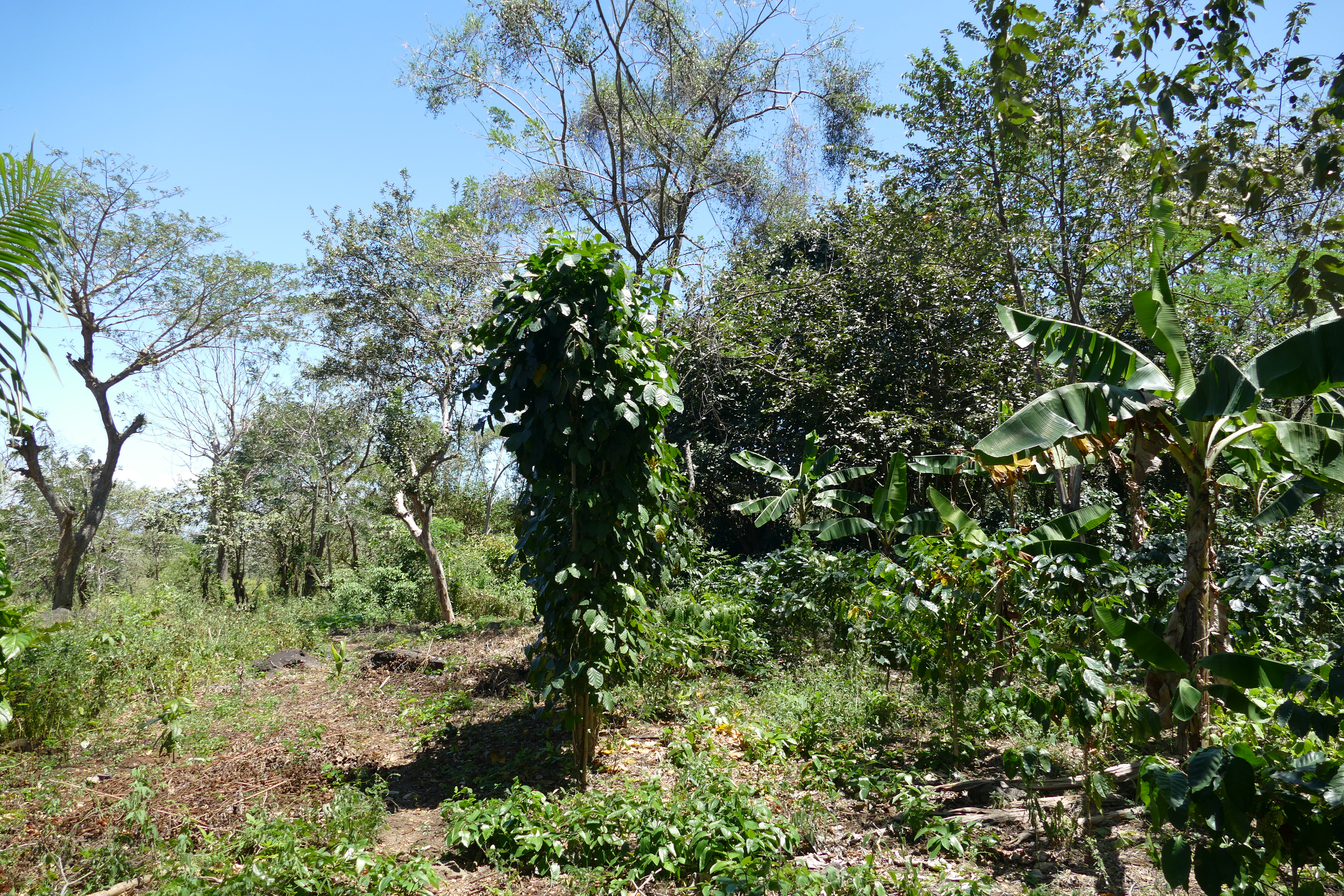
A shade-grown coffee agroforestry plot on Ometepe Island, with coffee bushes, banana plants, a climbing vine on a living support, and shade trees overhead
Crop diversification in action: shade-grown coffee bushes, banana plants, and a climbing vine trained up a living support, all sheltered beneath taller shade trees rather than cleared forest.

Natural and organic fertilisers.

One of the most striking innovations being developed and shared across the Ometepe farming community is the local production of natural fertilisers, replacing expensive chemical inputs with products made on the island, from local materials.

Members of the Biometepe team have been involved in teaching and sharing these techniques, including the creation of organic bio-fertilisers that improve soil health without damaging the ecosystem the parrots depend on.

Video Coming Soon

Adonis on the work Biometepe does with local farmers, sharing agroecology and bio-fertiliser techniques across Ometepe Island.

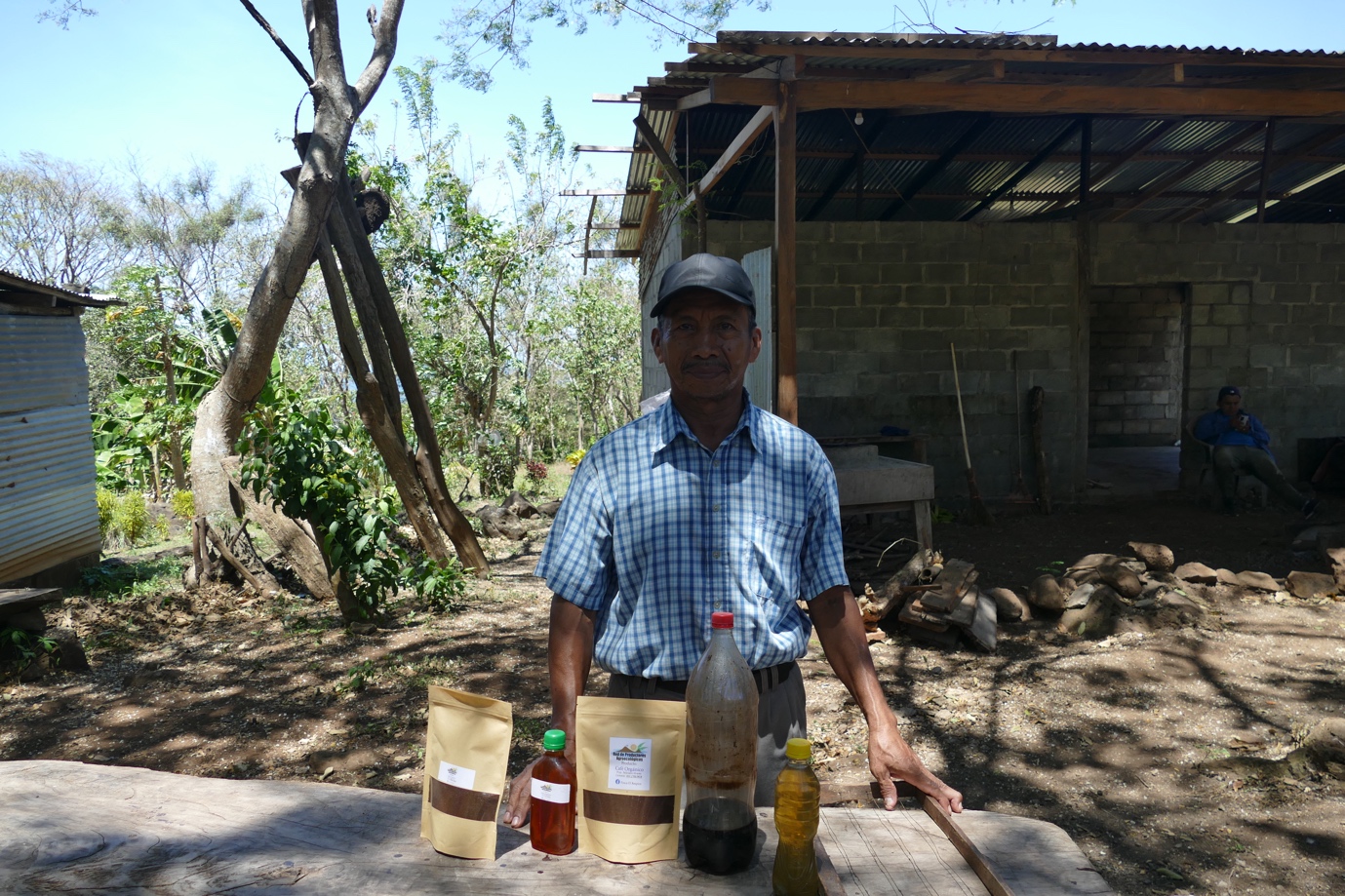
Agroecological farmer Feliciano Alvarez on Ometepe Island with the produce of his farm
Agroecological farmer Feliciano Alvarez on Ometepe Island. Snr. Alvarez is part of an agroecological cooperative group called Cooperativa Carlos Diaz Cajina.

In his own words.

Feliciano Alvarez, a member of the agroecological cooperative Cooperativa Carlos Diaz Cajina on Ometepe, spoke about what the agroecology transition has meant for him. On the table in front of him are the products of his farm: packets of Café Orgánico (organic coffee), and bottles of naturally-produced liquid fertilisers and preparations made on the island.

He also produces honey, and because his farming relies entirely on natural pesticides rather than chemical sprays, his beehives are entirely unharmed. The bees thrive alongside the crops, and the honey is a further income stream that would simply not exist under a conventional chemical farming model. He speaks with obvious pride, and with the ease of someone who has seen the results on his own land.

Video Coming Soon

Feliciano on agroecology on his own farm, the organic coffee, natural fertilisers, and honey his land now produces.

Biometepe's bio-fertiliser programme.

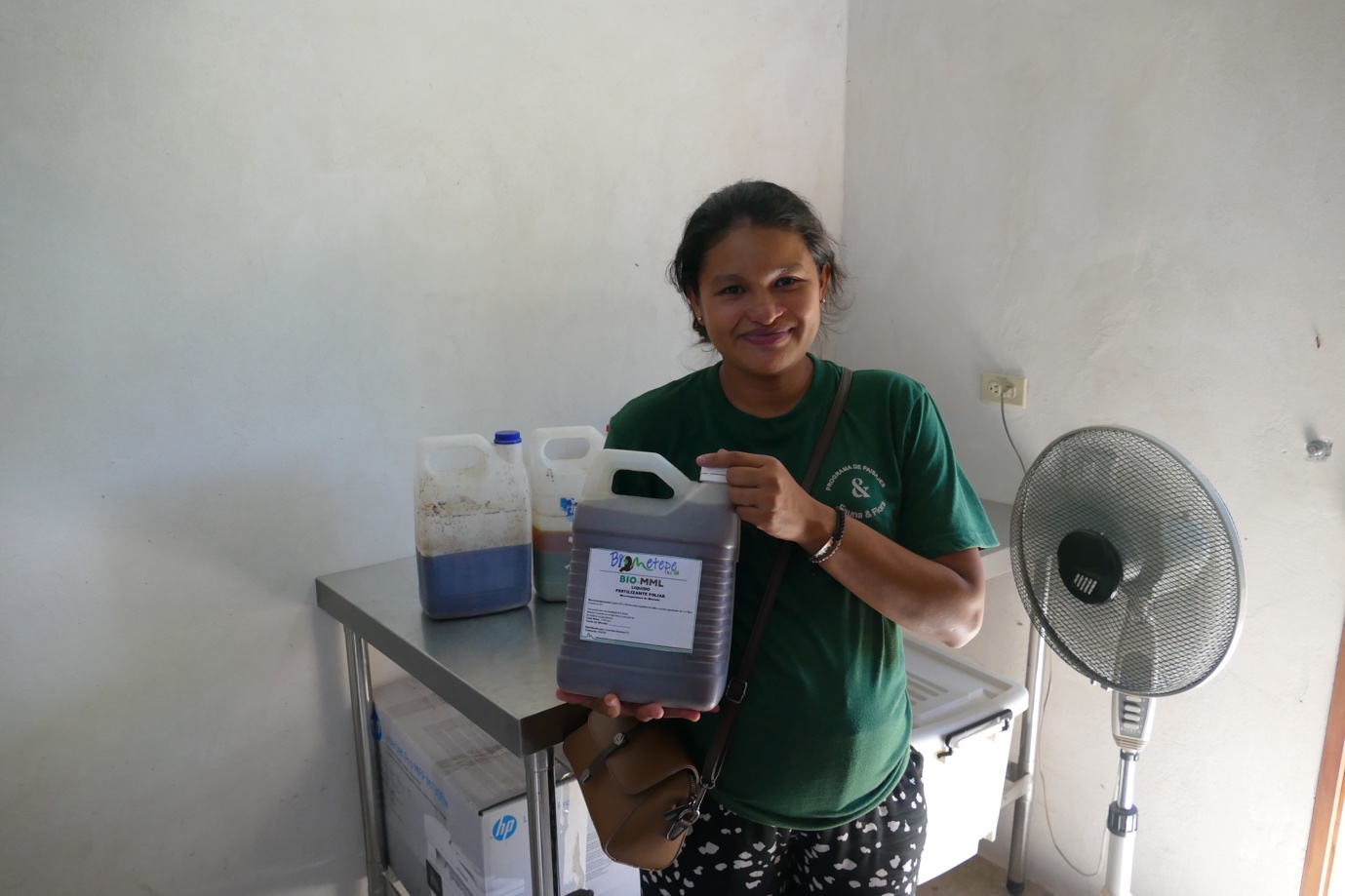
Selena Hernandez, Biometepe's Agroecology Technical Specialist, has developed and produced her own bio-fertiliser, labelled "Bio MML", which she is sharing across the farming community on Ometepe. What makes this particularly remarkable is the source material: the fertiliser draws on the volcanic soil and ash from the volcanoes that form the island itself.

Ometepe sits atop two volcanoes, Concepción and Maderas, and the sulphur-rich volcanic soil and ash they produce are uniquely potent agricultural inputs. The local population is not simply adapting to their environment; they are turning its most distinctive geological feature into a resource. It is a product that cannot be replicated anywhere else in the world, and it is being made by hand, on the island, by the people who live there.

This kind of knowledge transfer, from conservationist to farmer, is exactly the bridge that makes community-led conservation sustainable over the long term.

Selena Hernandez, Biometepe's Agroecology Technical Specialist, holding the organic bio-fertilisers Biometepe produce
Selena Hernandez, Biometepe's Agroecology Technical Specialist, with the organic bio-fertilisers that Biometepe produce.

How Biometepe uses organic pesticides.

Adonis and Selena explain the organic pesticide techniques being taught to farmers across Ometepe, replacing chemical products that damage the island's ecosystem with locally-produced, natural alternatives that protect crops without harming the wildlife the farmers share their land with.

Video Coming Soon

Inside the process: how Biometepe's natural fertilisers and organic pesticides are made on the island, from local materials.

The work Biometepe is doing on Ometepe

Yellow-naped amazon parrot conservation

Protecting and monitoring the nests of the critically endangered yellow-naped amazon parrot, maintaining tree-climbing equipment, training local monitors, and using camera traps to deter poaching of eggs and chicks.

Community education and awareness

Running parrot festivals and educational activities for local communities, raising awareness of the illegal pet trade and the importance of forest protection and fire management.

Agroforestry and forest protection

Encouraging crop diversification, agroforestry, and live fences over burning, reducing the pressure to clear the mature trees the parrots depend on for nesting.

Natural and organic fertilisers

Developing and sharing organic bio-fertilisers made from local materials, including the island's volcanic soil and ash, replacing expensive chemical inputs and improving soil health.

Organic pesticides

Teaching farmers locally-produced, natural pest-control techniques that protect crops without harming the wildlife they share their land with.

Native tree nursery

Running a community tree nursery to collect seeds and grow native forest and fruit trees for replanting across the island.

In the Field

How your donation will be used.

You donation is split equally between our two local partners. Here is what your donations make possible on the ground.

Nochari — Agroecology & Iguanas

La Camaroncita
$10,000

Strengthens Nochari's agroecological extensionist team, providing support to farmers and community education for eight months.

$1,500

Provides seeds and tools for 80 agroecological farming families for one planting season.

$100

Supports the rearing and release of an iguana into the wild.

Biometepe — Parrot Conservation

Ometepe Island
$10,000

Protects and monitors yellow-naped parrot nests — maintaining tree-climbing equipment, training local monitors, and giving local people incentives to protect rather than poach chicks.

$1,000

Hosts a "parrot festival" for local communities, with educational parrot-themed activities and awareness-raising on the illegal pet trade.

$100

Provides educational materials on forest protection and fire management in two local communities.

Biometepe — Agroecology & Bio-fertiliser

Ometepe Island
$10,000

Invests in equipment and labour at the community-run tree nursery to collect seeds, germinate and nurture the saplings of 1,000 native forest and fruit trees.

$3,000

Provides seeds, tools and bio-fertiliser for 80 agroecological farming families for one planting season.

Disclosure. As part of the standard regulatory framework in Nicaragua, local organisations are subject to a series of administrative fees associated with receiving international funding. In order to deploy funding as efficiently as possible, WildInvest and Fauna & Flora will consolidate donations received into fewer, larger disbursements to our partners, thereby minimising the cumulative impact of per-transaction and monthly fees.